---
title: Is Super El-Niño the Cause of UK Droughts?
description: Explore the impact of the super El Niño on UK droughts and discover solutions for sustainable water management to safeguard resources for businesses.
image: https://blog.veoliawatertechnologies.co.uk/hubfs/British%20landscape%20with%20the%20dried-up%20river.jpg
---
[Skip to content](https://blog.veoliawatertechnologies.co.uk/uk-droughts-is-super-el-ni%C3%B1o-the-real-culprit#main-content)
- UNITED KINGDOM
- [Online shop](https://uk.shop.veoliawatertechnologies.com/?__hstc=87449607.217c47630b00f349d55659f70d7b5bb6.1714376476665.1714481227412.1714485265865.4&__hssc=87449607.5.1714485265865&__hsfp=1840189571&_gl=1*1p02bir*_ga*ODg3MDc2Mzc1LjE3MTQzNzY0NzU.*_ga_Y5BN5GRTLT*MTcxNDQ4NTI2NS4zLjEuMTcxNDQ4NzQyMi41Ny4wLjA.)
- [Other Veolia sites](http://www.veoliawatertechnologies.com/en/about-us/multi-local-presence?__hstc=87449607.217c47630b00f349d55659f70d7b5bb6.1714376476665.1714481227412.1714485265865.4&__hssc=87449607.5.1714485265865&__hsfp=1840189571)
[](https://veoliawatertechnologies.co.uk/)
- Explore Water Treatment
- [ Markets](https://www.veoliawatertechnologies.co.uk/markets)
- [ Applications](https://www.veoliawatertechnologies.co.uk/applications)
- [ Technologies](https://www.veoliawatertechnologies.co.uk/technologies)
- [ Products](https://www.veoliawatertechnologies.co.uk/products)
- [ Services](https://www.veoliawatertechnologies.co.uk/services)
- [Customer Services](https://www.veoliawatertechnologies.co.uk/customer-services)
- [About Us](https://www.veoliawatertechnologies.co.uk/about-us)
- [Careers](https://www.veoliawatertechnologies.co.uk/careers)
- News & Resources
- [ Blog](https://blog.veoliawatertechnologies.co.uk)
- [ Events](https://www.veoliawatertechnologies.co.uk/events)
- [ Webinars](https://www.veoliawatertechnologies.co.uk/webinars)
- [ News](https://www.veoliawatertechnologies.co.uk/news)
- [ Resources](https://www.veoliawatertechnologies.co.uk/tech-resources)
- [ Case Studies](https://www.veoliawatertechnologies.co.uk/case-studies)
- [Contact](https://www.veoliawatertechnologies.co.uk/contact)
- Explore Water Treatment
- [ Markets](https://www.veoliawatertechnologies.co.uk/markets)
- [ Applications](https://www.veoliawatertechnologies.co.uk/applications)
- [ Technologies](https://www.veoliawatertechnologies.co.uk/technologies)
- [ Products](https://www.veoliawatertechnologies.co.uk/products)
- [ Services](https://www.veoliawatertechnologies.co.uk/services)
- [Customer Services](https://www.veoliawatertechnologies.co.uk/customer-services)
- [About Us](https://www.veoliawatertechnologies.co.uk/about-us)
- [Careers](https://www.veoliawatertechnologies.co.uk/careers)
- News & Resources
- [ Blog](https://blog.veoliawatertechnologies.co.uk)
- [ Events](https://www.veoliawatertechnologies.co.uk/events)
- [ Webinars](https://www.veoliawatertechnologies.co.uk/webinars)
- [ News](https://www.veoliawatertechnologies.co.uk/news)
- [ Resources](https://www.veoliawatertechnologies.co.uk/tech-resources)
- [ Case Studies](https://www.veoliawatertechnologies.co.uk/case-studies)
- [Contact](https://www.veoliawatertechnologies.co.uk/contact)
TOP
[ Back](https://blog.veoliawatertechnologies.co.uk)
- [Sustainability](https://blog.veoliawatertechnologies.co.uk/?tid=93394872526)
- Connect with us
-
-
-
# Is Super El-Niño the Cause of UK Droughts?
by Anne Abraham
9 May 2025
8 minutes read
[ Back](https://blog.veoliawatertechnologies.co.uk) Follow
**At a glance:**
*The current ‘super’ El-Niño is predicted to drive changes in weather patterns, including drought conditions, across large areas of the world. It is unknown what effect this will have on the UK but it is clear that global climate change is putting the UK at risk of drought more frequently than ever before. Here we look at what this means for businesses, what can be done to address this, and the solutions available.*
**The current ‘super’ El-Niño in the Pacific is likely to bring disruption to weather patterns to a wide area, including drought conditions and flooding. But what does it mean for the UK?**
## **What is El Niño?**
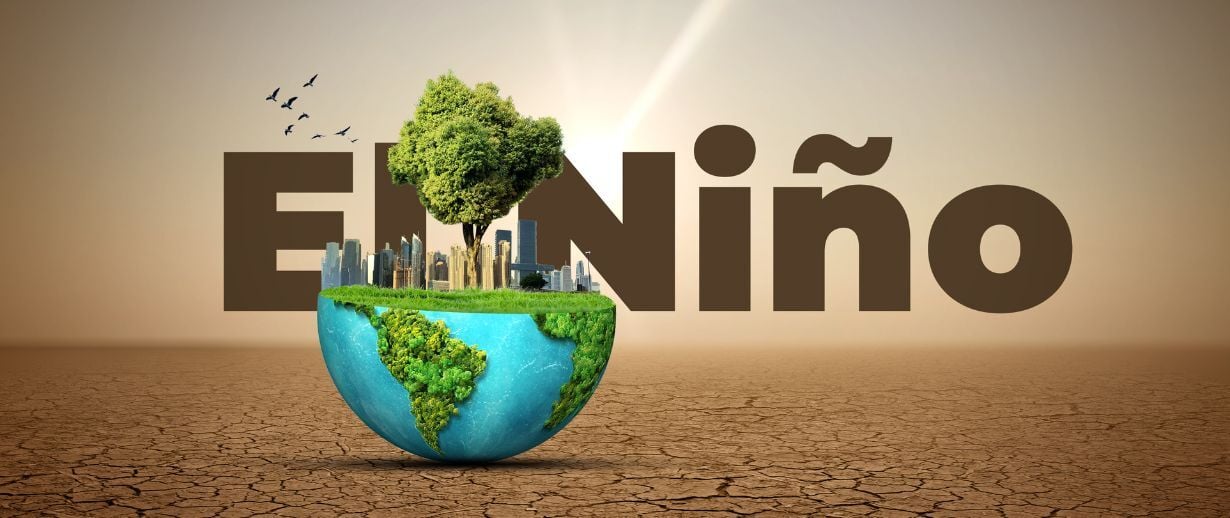
Meteorological organisations from around the world have declared that El-Niño conditions in the Pacific have officially begun. This naturally occurring sea warming in the tropical Pacific, lasts around 12 months and occurs every two to seven years.
## **What is a super El-Niño?**
This El-Niño is expected to be one of the strongest seen in recent years – dubbed a ‘super El Niño’. While not an official term used by meteorological experts, a ‘super’ El-Niño is considered one where the sea temperature rise exceeds 2ºC – something that is exceptional for this phenomenon1. Some models suggest that this El-Niño could see a 3ºC rise. Only once since 1950 has El-Niño driven a 2.5ºC change, which was in 2015-162.
An increase in flooding is expected across areas such as Peru and Ecuador as well as East Africa, Central Asia and the southern US states. Meanwhile, drought conditions are a real risk in Australia, Indonesia, South-East Asia, Central America and northern South America3.
## **What has changed?**
The 21st Century and particularly the last decade has seen a shift to hotter and dryer weather, especially in the spring and summer, as well as higher average temperatures and more extreme rainfall, when it does occur.
Met Office data shows that in 2025, the average temperature across the year made it the warmest year on record. In fact, four of the five warmest years ever recorded have been since 2020 – these being 2022, 2023, 2024 and 2025, with 2014 being the other one that makes up the top five4.
The trend is also towards regular dry and even drought conditions, often caused by dry spring weather. Spring 2026 (March to May) was notably dry with only 86% of the average rain for the time of year across the country – the 8th driest on record. However, in some regions the picture was even more concerning, with south-east England recording just half the average rainfall5.
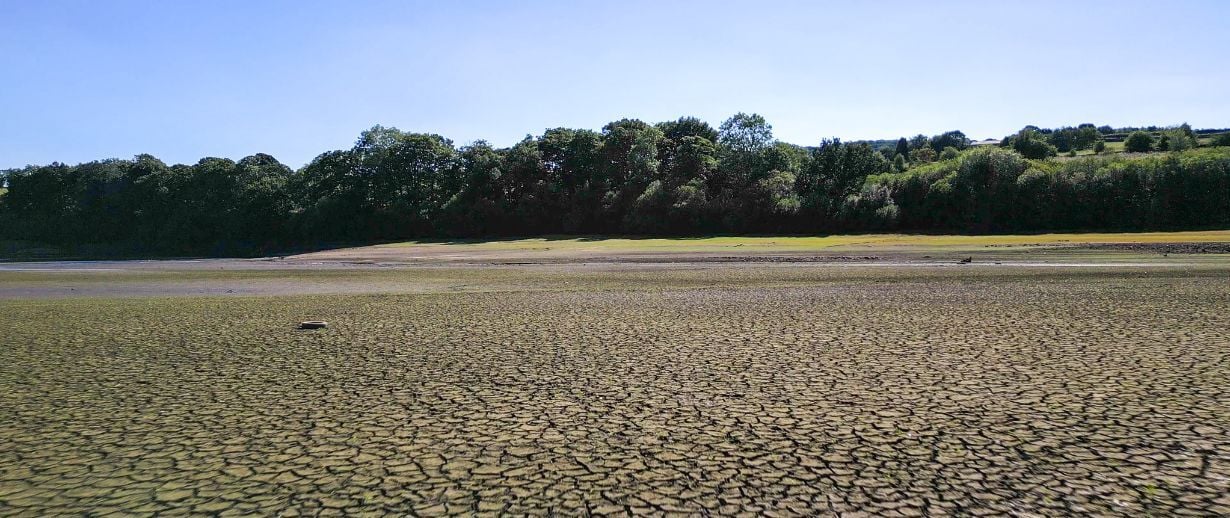
This is not an isolated occurrence. Spring 2025 saw just 56% of average rainfall6 and it was the driest spring in England since 18937. This was followed by a very dry summer leading to severe pressure on water supplies. A government review of the drought shows that 15 of the key reservoirs reached capacities below 50%, including Ardingly reservoir that was at only 17% capacity by October8. This came just three years after a particularly severe drought in 2022 when the Environment Agency officially declared drought conditions in eight of the fourteen areas9. In response to dwindling water supplies, 17 of 18 water companies activated their drought plans during this time10.
## **What do droughts mean for businesses?**
Responsible businesses have a role in ensuring they help to sustainably manage the resources of the area in which they operate and water footprint is an important part of any sustainability plan. Customers, both other businesses and consumers, are increasingly aware of this issue and make sustainability-driven choices. In addition, during severe drought conditions, water companies can apply to enact ‘drought orders’, which allow them to restrict the use of water for commercial purposes. All of this means that businesses should look at how they can reduce their water usage.
## **What solutions are available?**
There are a range of opportunities and solutions for minimising the water impact of commercial and industrial sites, from reducing process water usage to water reuse and recycling.
The first step is to undertake a comprehensive site audit, also referred to as a global water audit in partnership with a leading water treatment specialist such as Veolia. We will carry out full water mapping to generate a complete view of how and where water is being used across the site from water intake to final discharge. The water audit will:
- Examine water flows, rates, volumes and quality - including seasonal fluctuations – with reference to discharge permits and regulations.
- Document usage patterns and quantify water usage for each production stage and purpose
- Pinpoint areas of excessive consumption
- Identify opportunities for process optimisation to reduce water consumption
- Determine which processes can feasibly integrate reclaimed water
- Help address scarcity rising costs and support the potential for business expansion.
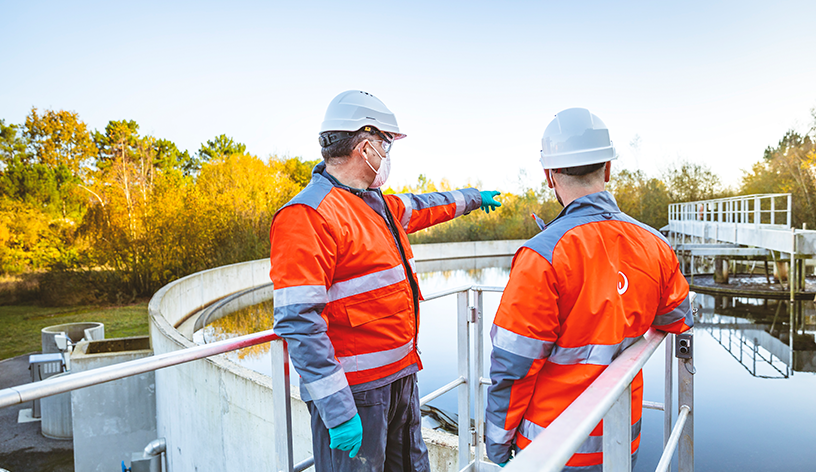
There is a wide range of treatment technologies available that enable water reuse on site including [reverse osmosis (RO)](https://www.veoliawatertechnologies.co.uk/technologies/reverse-osmosis), [filtration](https://www.veoliawatertechnologies.co.uk/technologies/filtration-water-treatment), [clarification](https://www.veoliawatertechnologies.co.uk/technologies/clarification) and [evaporation](https://www.veoliawatertechnologies.co.uk/technologies/evaporation). Each of these is suited to particular applications and types of wastewater. At Veolia, will be able to provide guidance on which solution is the most appropriate based on the characteristics of the wastewater and the needs of the business.
## **What more can be done?**
Water stress and scarcity is no longer exceptional, affecting even regions long considered water abundant. Therefore, the issue needs to be tackled at every level – local, national and international.
Water reuse is an essential part of this and the solutions already exist, however there remain structural and cultural barriers to more widescale adoption. At Veolia, we strongly believe that systemic change will not result from isolated initiatives, but from coalitions capable of aligning incentives and accelerating implementation.
As an organisation, [we have made commitments](https://www.veolia.com/en/our-media/press-releases/veolia-stakeholders-assembly-uptake-water-reuse-water-security) to drive the changes required to ensure water reuse is adopted at the scale necessary. These commitments include engaging with the public and local governments on the issue; calling for a recurring UN Water Conference; sharing knowledge; developing and supporting training initiatives; and making water reuse solutions part of a 'water mix' that combines natural sources, desalination, water reuse and other strategies, such as demand management and basin-level negotiations.
While the current El-Niño has grabbed the headlines, longer term and potentially much more serious changes to the global climate are driving trends in UK weather. The result of this increasingly hot and dry weather is more frequent and severe droughts, making sustainable management of water resources, and water reuse in particular, more crucial than ever. Partnering with Veolia will help businesses to assess and optimise water usage through a range of different solutions, helping to contribute to better use of water.
Let us help you improve your site's water usage, [get in contact now.](https://www.veoliawatertechnologies.co.uk/contact)
---
1 - [https://yaleclimateconnections.org/2026/04/a-powerhouse-el-nino-event-appears-to-be-brewing-for-2026-27/](https://yaleclimateconnections.org/2026/04/a-powerhouse-el-nino-event-appears-to-be-brewing-for-2026-27/)
2 & 3 - [https://www.bbc.co.uk/news/articles/c75ylx7g00xo](https://www.bbc.co.uk/news/articles/c75ylx7g00xo)
4 - [https://www.metoffice.gov.uk/api/assets/file/annual\_assessment\_2025pdf?prefix=assets](https://www.metoffice.gov.uk/api/assets/file/annual_assessment_2025pdf?prefix=assets)
5 - [https://www.metoffice.gov.uk/api/assets/file/SeasonalAssessment-Spring26pdf?prefix=assets&prefix=assets](https://www.metoffice.gov.uk/api/assets/file/SeasonalAssessment-Spring26pdf?prefix=assets&prefix=assets)
6 - [https://www.metoffice.gov.uk/api/assets/file/seasonal-assessment---spring-2025pdf?prefix=assets](https://www.metoffice.gov.uk/api/assets/file/seasonal-assessment---spring-2025pdf?prefix=assets)
7 - [https://www.gov.uk/government/publications/2025-drought-how-it-developed-in-england/2025-drought-how-it-developed-in-england](https://www.gov.uk/government/publications/2025-drought-how-it-developed-in-england/2025-drought-how-it-developed-in-england)
8 - [https://www.gov.uk/government/publications/2025-drought-how-it-developed-in-england/2025-drought-how-it-developed-in-england](https://www.gov.uk/government/publications/2025-drought-how-it-developed-in-england/2025-drought-how-it-developed-in-england)
9 - [https://www.gov.uk/government/news/environment-agency-chairs-national-drought-group-as-parts-of-country-move-into-drought](https://www.gov.uk/government/news/environment-agency-chairs-national-drought-group-as-parts-of-country-move-into-drought)
10 - [https://www.gov.uk/government/publications/drought-management-for-england/drought-how-it-is-managed-in-england](https://www.gov.uk/government/publications/drought-management-for-england/drought-how-it-is-managed-in-england)
## Tags
- [Sustainability](https://blog.veoliawatertechnologies.co.uk/?tid=93394872526)
## Related articles
## Discover *VWT UK*
### Latest news
[News](https://veoliawatertechnologies.co.uk/news/)
{|item.processed.title|}
Published: {|item.processed.published|}
### Latest webinars
[Webinars](https://veoliawatertechnologies.co.uk/webinars/)
{|item.processed.title|}
Date: {|item.processed.date|}
### Upcoming events
[Events](https://veoliawatertechnologies.co.uk/events/)
{|item.processed.title|}
Date: {|item.processed.date\_from|} - {|item.processed.date\_to|}
### Latest resources
[Resources](https://veoliawatertechnologies.co.uk/tech-resources/)
{|item.processed.title|}
Published: {|item.processed.published|}
| {|item.processed.city|}

## Sign up to blog notifications
Receive the latest blog updates.
{|error|}
By checking this box, you agree to **Veolia Water Technologies's** [Privacy Policy](https://veoliawatertechnologies.co.uk/privacy-policy) and you agree to receive information on our products and services.
Keep me informed
We respect your right to privacy. Click here to view our [contact policy](https://veoliawatertechnologies.co.uk/privacy-policy).
## Thank you for subscribing.
Please note that you can update your **preferences** at any time.
Return to blog
Note: If you do not receive any emails, please check your junk folder.
```json
{
"@context" : "https://schema.org",
"@type" : "BlogPosting",
"author" : {
"@type" : "Person",
"name" : "Anne Abraham",
"url" : "https://blog.veoliawatertechnologies.co.uk/author/anne-abraham"
},
"dateModified" : "2026-08-03T09:14:36.804Z",
"datePublished" : "2026-06-30T22:00:00.000Z",
"headline" : "Is Super El-Niño the Cause of UK Droughts?",
"image" : [ "https://blog.veoliawatertechnologies.co.uk/hubfs/British%20landscape%20with%20the%20dried-up%20river.jpg" ],
"mainEntityOfPage" : {
"@id" : "https://blog.veoliawatertechnologies.co.uk/uk-droughts-is-super-el-niño-the-real-culprit",
"@type" : "WebPage"
},
"publisher" : {
"@type" : "Organization",
"logo" : {
"@type" : "ImageObject",
"url" : "https://blog.veoliawatertechnologies.co.uk/hubfs/header-logo.png"
},
"name" : "Veolia Water Technologies"
}
}
```