---
title: The environmental challenges for the pulp and paper industry
description: Explore strategies for reducing pollutants in the pulp and paper industry, focusing on sustainability, innovation, and economic benefits for success.
image: https://blog.veoliawatertechnologies.co.uk/hubfs/Large%20white%20paper%20rolls%20in%20a%20clean%20warehouse.png
---
[Skip to content](https://blog.veoliawatertechnologies.co.uk/the-environmental-challenges-for-the-pulp-and-paper-industry#main-content)
- UNITED KINGDOM
- [Online shop](https://uk.shop.veoliawatertechnologies.com/?__hstc=87449607.217c47630b00f349d55659f70d7b5bb6.1714376476665.1714481227412.1714485265865.4&__hssc=87449607.5.1714485265865&__hsfp=1840189571&_gl=1*1p02bir*_ga*ODg3MDc2Mzc1LjE3MTQzNzY0NzU.*_ga_Y5BN5GRTLT*MTcxNDQ4NTI2NS4zLjEuMTcxNDQ4NzQyMi41Ny4wLjA.)
- [Other Veolia sites](http://www.veoliawatertechnologies.com/en/about-us/multi-local-presence?__hstc=87449607.217c47630b00f349d55659f70d7b5bb6.1714376476665.1714481227412.1714485265865.4&__hssc=87449607.5.1714485265865&__hsfp=1840189571)
[](https://veoliawatertechnologies.co.uk/)
- Explore Water Treatment
- [ Markets](https://www.veoliawatertechnologies.co.uk/markets)
- [ Applications](https://www.veoliawatertechnologies.co.uk/applications)
- [ Technologies](https://www.veoliawatertechnologies.co.uk/technologies)
- [ Products](https://www.veoliawatertechnologies.co.uk/products)
- [ Services](https://www.veoliawatertechnologies.co.uk/services)
- [Customer Services](https://www.veoliawatertechnologies.co.uk/customer-services)
- [About Us](https://www.veoliawatertechnologies.co.uk/about-us)
- [Careers](https://www.veoliawatertechnologies.co.uk/careers)
- News & Resources
- [ Blog](https://blog.veoliawatertechnologies.co.uk)
- [ Events](https://www.veoliawatertechnologies.co.uk/events)
- [ Webinars](https://www.veoliawatertechnologies.co.uk/webinars)
- [ News](https://www.veoliawatertechnologies.co.uk/news)
- [ Resources](https://www.veoliawatertechnologies.co.uk/tech-resources)
- [ Case Studies](https://www.veoliawatertechnologies.co.uk/case-studies)
- [Contact](https://www.veoliawatertechnologies.co.uk/contact)
- Explore Water Treatment
- [ Markets](https://www.veoliawatertechnologies.co.uk/markets)
- [ Applications](https://www.veoliawatertechnologies.co.uk/applications)
- [ Technologies](https://www.veoliawatertechnologies.co.uk/technologies)
- [ Products](https://www.veoliawatertechnologies.co.uk/products)
- [ Services](https://www.veoliawatertechnologies.co.uk/services)
- [Customer Services](https://www.veoliawatertechnologies.co.uk/customer-services)
- [About Us](https://www.veoliawatertechnologies.co.uk/about-us)
- [Careers](https://www.veoliawatertechnologies.co.uk/careers)
- News & Resources
- [ Blog](https://blog.veoliawatertechnologies.co.uk)
- [ Events](https://www.veoliawatertechnologies.co.uk/events)
- [ Webinars](https://www.veoliawatertechnologies.co.uk/webinars)
- [ News](https://www.veoliawatertechnologies.co.uk/news)
- [ Resources](https://www.veoliawatertechnologies.co.uk/tech-resources)
- [ Case Studies](https://www.veoliawatertechnologies.co.uk/case-studies)
- [Contact](https://www.veoliawatertechnologies.co.uk/contact)
- [Online Shop](https://uk.shop.veoliawatertechnologies.com/)
- [Other Veolia Sites](https://www.veoliawatertechnologies.com/en/about-us/veolia-water-technologies/veolia-water-technologies-around-world)
- [Login](https://www.veoliawatertechnologies.co.uk/services/customer-portal-remote-monitoring)
- [Cookie Policy](https://www.veoliawatertechnologies.co.uk/cookie-policy)
- [Terms & Conditions](https://www.veoliawatertechnologies.co.uk/legal-0)
- [Privacy Policy](https://www.veoliawatertechnologies.co.uk/privacy-policy)
- [Modern Slavery Statement](https://www.veoliawatertechnologies.co.uk/modern-slavery-and-human-trafficking-statement)
- [Site Map](https://www.veoliawatertechnologies.co.uk/sitemap)
TOP
[ Back](https://blog.veoliawatertechnologies.co.uk)
- [Pulp & Paper](https://blog.veoliawatertechnologies.co.uk/?tid=412709101756)
- Connect with us
-
-
-
# The environmental challenges for the pulp and paper industry

by Filipa Ferreira
01 June 2026
14 minutes read
[ Back](https://blog.veoliawatertechnologies.co.uk) Follow
**The paper and pulp industry in the UK faces significant environmental challenges, particularly regarding the consumption of water resources during production processes, water usage and wastewater management. Here, we explore strategies and technologies that can help to reduce environmental footprint and improve operational efficiency as well as long-term profitability.**
## The problem of pollutants in pulp & paper
The pulp and paper industry has historically had a number of challenges with wastewater management. The issues that need to be considered include:
- **Organic compounds:** The decomposition of wood and other plant materials releases a variety of organic compounds, including cellulose, which can have harmful effects on aquatic ecosystems.
- **Suspended solids:** Fine fibre particles and other materials that can affect water quality and aquatic life.
- **Chlorinated compounds:** When used in the bleaching process, these compounds can be toxic to aquatic life and persistent in the environment.
- **Nutrients:** Nitrogen and phosphorus present in effluents can lead to the eutrophication of water bodies.
- **Heavy metals:** Although to a lesser extent, some processes can release heavy metals that are harmful to human health and the environment.
- **Emerging contaminants:** Various stages of the production process can generate micropollutants and PFAS (forever chemicals) that are challenging to reduce from wastewater.
- **Lignin removal:** A specific issue for paper and pulp is lignin, which increases chemical oxygen demand (COD) and biochemical oxygen demand (BOD) as well as colouring the water. All of which are issues for aquatic environments.
### **Context: The impact on water resources**
The UK and Europe as a whole are facing a water deficit by 2050. Climate change, rising populations and aging infrastructure have all contributed to increased water stress and scarcity. This means *all* sectors and industries have a responsibility to address water usage. In the UK, the Environmental Targets (Water) (England) Regulations 2023 set a target of reducing water demand by 20% by 2038 compared to the 2019/20 baseline. Similarly, in the EU, the Water Resilience Strategy aims to achieve a 10% reduction in demand by 2030.
However, for the paper and pulp industry, the very nature of production processes requires high levels of water consumption and as such, organisations are seeking innovative strategies and solutions. In fact, 85% of pulp and paper processes require the use of water. Additionally, several pulp mills in Europe are diversifying from the traditional paper pulp into solvent pulp used for textiles and packaging. This process is typically more water-intensive, making water resources more important.
## **Strategies for reducing pollutants in the pulp & paper industry**
**Optimisation of production processes**: The first line of defence is the optimisation of production processes. This involves:
- Improving efficiency in the use of raw materials by utilising advanced technologies to maximise pulp yield and minimise waste.
- Reducing water consumption by implementing closed-loop systems and water recycling techniques within the production process.
- Using greener chemicals and adopting alternatives in pulping and paper bleaching processes that present less of an issue.
**Implementation of advanced treatment technologies**
This is where Veolia’s solutions play a crucial role. Advanced water treatment technologies can significantly reduce the pollutant load of effluents. Some of these include:
| **Technology** | **Direct Benefits** |
| --- | --- |
| **Actiflo\*:** A high-rate clarification system that achieves efficient separation of suspended solids from wastewater. | Significantly reduces suspended solids and water turbidity. Takes up significantly less space compared to conventional clarification systems. Allows quick start-up and agile adaptation to fluctuations in water quality. |
| **ZeeWeed\* MBR (Membrane Bioreactor):** A MBR unit combines traditional biological treatment with membrane filtration, offering a compact and highly efficient solution for wastewater treatment. | Produces high-quality effluent, suitable for reuse in industrial processes. Reduces carbon footprint by minimising sludge production. Offers stable operation and resilience to fluctuations in pollutant load. Enhanced micropollutant treatment through membrane filtration and biological degradation. |
| **Anoxkaldnes\* MBBR (Moving Bed Biofilm Reactor):** This technology uses carriers as a support medium for biomass growth, increasing the efficiency of biological treatment. | Allows higher organic load in a reduced space. Improves removal of recalcitrant organic compounds. Provides operational flexibility and resistance to load shocks. |
| **BPED (Bipolar Electrodialysis)** This advanced technology uses bipolar membranes to generate acids and bases from salts, enabling valuable chemical recovery. | Enables recovery and reuse of process acids and bases. Reduces the need for external chemicals. Minimises generation of saline waste. |
## CASE STUDY: Water consumption reduction for Canadian pulp & paper manufacturer
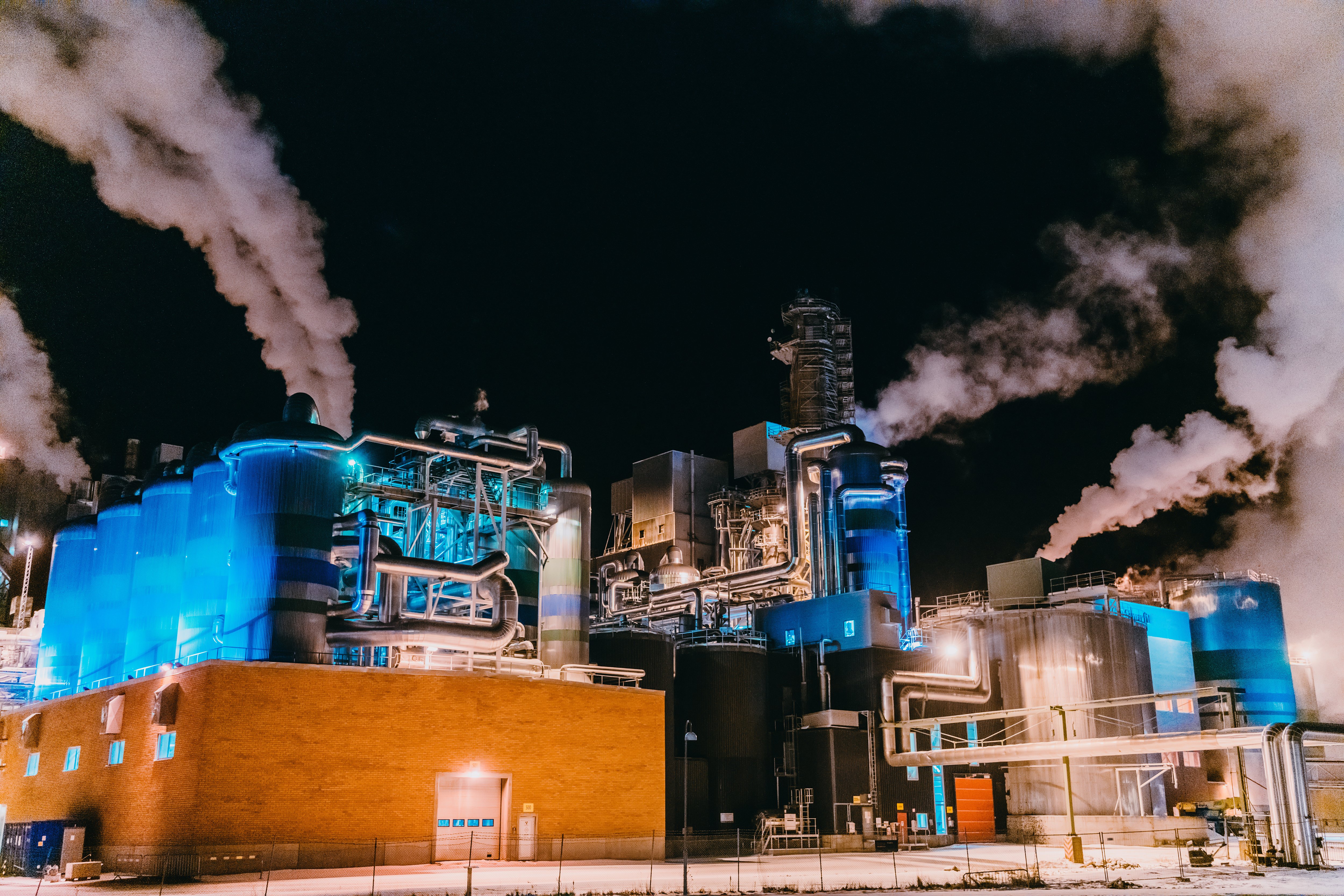
Veolia helped a major Canadian pulp and paper manufacturer significantly reduce its water consumption through an innovative wastewater treatment solution.The pulp and paper mill aimed to reduce water consumption by 6,000 m³/day in summer and 8,000 m³/day in winter. In addition, the team wanted to reduce raw freshwater (RW) demand, improve process water quality, recover thermal energy and reduce wastewater flow.
**The solution**
This involved cleaning and reusing certain process water streams, including vacuum seal water (VSW) containing white fibre, and blending it with raw freshwater (RW) for replenishment.
Veolia implemented an innovative solution consisting of:
- The installation of two Actiflo package plants to treat vacuum pump seal wastewater.
- The production of high-quality water for use in papermaking, blended with river water.
- The implementation of the Actiflo ballasted clarification process to produce purified water at a rate of 3,400 USGPM (US gallons per minute).
**Results**
- **Significant energy savings**: Major energy savings were achieved by avoiding reheating cold river water for mill use.
- **Water quality improvement**: Veolia's Actiflo system transformed wastewater with turbidity of 600-800 NTU into water with turbidity of less than 1.5 NTU, without additional filtration.
- **Reduced water consumption**: The mill met its goal of significantly reducing water consumption, both in summer and winter.
- **Reliable source of high-quality water**: The solution provided the mill with a constant and reliable source of high-quality water for its production processes.
- **Process optimisation**: The reuse of treated wastewater allowed the mill to optimise its processes and reduce its overall water footprint.
## **Challenges and opportunities in pulp & paper**
****
It is important to recognise that the challenges faced by the pulp and paper industry do also represent potential opportunities as well for businesses that want to be future-proof. For example:
**Challenge: Initial investment**
Implementing advanced treatment technologies and cleaner production systems often requires significant upfront investment. This can be an obstacle, especially for small and medium-sized enterprises in the sector.
Opportunities:
- Development of green financing schemes and government incentives for adopting clean technologies.
- Collaborations between companies to share treatment costs and infrastructure.
**Challenge: Technological adaptation**
Integrating new technologies into existing production processes can be complex and require significant operational changes.
Opportunities:
- Ongoing training and education of staff in new technologies and sustainable practices.
- Collaboration with technology providers like Veolia to develop customised and scalable solutions.
**Challenge: Variability in raw material quality**
Especially in the case of recycled paper, variability in raw material quality can affect treatment process efficiency and final product quality.
Opportunities:
- Investment in more advanced sorting and cleaning technologies to improve recycled fibre quality.
- Development of new products that can use a wider range of fibre qualities.
**Challenge: Balancing product quality and sustainability**
There is a constant challenge to maintain or improve the final product quality while implementing more sustainable practices.
Opportunities:
- Product formulation innovation to maintain desired properties with lower environmental impact.
- Consumer education on the benefits of more sustainable paper products.
**Challenge: Changing regulations**
The environmental regulatory landscape is constantly evolving, requiring ongoing adaptation by the industry.
Opportunities:
- Active participation in the development of environmental policies and standards.
- Proactive adoption of sustainable practices that exceed current regulatory requirements.
## **The role of continuous innovation** in pulp & paper
Reducing pollutants in the paper industry is a continuous journey of improvement and innovation, but there are promising areas for future research and development worthwhile highlighting.
Integrating **Artificial Intelligence (AI)** and **Machine Learning (ML)** into water treatment processes and waste management can lead to significant improvements. Veolia’s Hubgrade digital services combine AI with human expertise to provide a range of benefits, including:
- **Predictive optimisation**: Use of machine learning algorithms to predict and optimise treatment system performance.
- **Adaptive control**: Implementation of intelligent control systems that can adjust operating parameters in real time based on sensor data.
- **Predictive maintenance**: Use of advanced data analytics to predict and prevent failures in critical equipment.
Finally, the future of the paper and pulp industry is intrinsically linked to the principles of the circular economy. This is already developing in a number of ways:
- **Design for recyclability**: Development of paper products and packaging that are easier to recycle and reuse.
- **Waste upcycling**: Research into converting paper industry waste into higher-value products, such as nanomaterials or specialised chemical compounds.
- **Industrial symbiosis**: Creation of eco-industrial parks where one company's waste becomes input for another, maximising resource efficiency regionally.
## **Strategic implementation of solutions**
Successful adoption of technologies and practices for pollutant reduction requires a strategic and holistic approach. Here is an initial step-by-step guide for those who are starting their journey to improve environmental performance.
1\. The first step is to conduct a comprehensive process assessment of the entire production process. This could include:
- **Material flow audit**: Complete mapping of material inputs and outputs at each process stage.
- **Critical point analysis**: Identify the areas with the highest pollutant generation or resource consumption.
- **Current technology evaluation**: Review the efficiency and state of existing production and treatment technologies.
2\. Based on the assessment, it is crucial to set clear, specific, measurable, and achievable objectives. Some examples of objectives you could set are:
- **Pollutant reduction targets**: Aim to reduce effluent COD by 50% in two years.
- **Resource efficiency goals**: Decrease freshwater consumption by 30% in three years.
- **Waste valorisation targets**: Achieve 80% solid waste valorisation in five years.
3\. Next, it is crucial to choose the right technologies based on multiple key factors such as:
- **Proven effectiveness**: Prioritise technologies with a proven track record in similar applications.
- **Scalability:** Ensure solutions can grow with the plant’s future needs.
- **Total cost of ownership**: Consider both the initial investment and the long-term operating and maintenance costs of new technologies.
- **Compatibility**: Assess integration with existing systems and your company’s organisational culture.
4\. Once the technology is selected, taking a phased approach and gradually implementing solutions can help paper and pulp producers manage both risks and resources. Examples of strategies that could be implemented are:
- **Pilot projects**: Start with small-scale implementations to validate effectiveness and adjust parameters.
- **Continuous optimisation**: Use the lessons learned from each phase to improve subsequent implementations.
- **Strategic expansion**: Extend the use of successful solutions throughout the plant or to multiple facilities.
5\. Securing long term success often depends on active participation from all staff, which can be achieved through training and active engagement. To engage with employees you could develop:
- **Training programs**: Develop comprehensive training programs for all organisational levels.
- **A system of aligned incentives**: Establish reward systems that encourage innovation and commitment to sustainability.
- **A transparent communication policy**: Keep all stakeholders informed about objectives, progress, and challenges.
6\. Finally, once the solutions have been implemented, monitoring and continuous improvement are crucial to ensuring you are able to meet your long-term goals. To achieve this, your business could adopt:
- **Advanced measurement systems**: Implement real-time monitoring systems to track the performance of new technologies.
- **Data analysis**: Use advanced analytical tools to identify trends and improvement opportunities.
- **Periodic reviews**: Conduct regular evaluations to ensure goals are being met and adjust strategies as needed.
## **The economic benefits of sustain**ability in the pulp & paper industry

It is important to highlight that pollutant reduction and the adoption of more sustainable practices will not only benefit the environment, but it can also have a significant positive economic impact on businesses as well. With the paper and pulp industry in the UK continuing to face significant financial pressures, the possible benefits of taking a proactive approach to sustainability could be significant. Let’s summarise:
**1. Reduction of operating costs**
- **Energy efficiency**: Implementing modern treatment and production technologies can often lead to greater efficiency.
- **Resource optimisation**: Water reuse and chemical recovery can significantly decrease raw material costs.
- **Lower disposal costs**: Waste reduction and valorisation can decrease final disposal-related costs.
**2. Mitigation of regulatory risks**
- **Proactive compliance**: Staying ahead of environmental regulations reduces the risk of fines and sanctions.
- **License to operate**: Good environmental performance also facilitates positive relations with the regulatory authorities and permit acquisition.
**3. Improved reputation and market access**
- **Brand differentiation**: More sustainable products can command premium prices in certain markets.
- **Access to international markets**: Meeting strict environmental standards can open doors to other international markets.
- **Attracting investment**: Companies with strong environmental credentials are more attractive to sustainability-conscious investors.
**4. Innovation and competitiveness**
- **Innovation culture**: Focus on sustainability fosters a culture of continuous improvement and innovation throughout the organisation.
- **Competitive advantage**: Companies leading in sustainability are better positioned to adapt to future market and regulatory pressures.
## **Conclusion**
Sustainability is not only an environmental necessity and responsibility, but also an opportunity for innovation, growth, and value creation. However, it does require long-term vision and a behavioural shift, as well as investment in technology and innovation.
At Veolia, we are committed to helping you achieve both your environmental and operational efficiency goals, and we understand that every facility has its own set of individual needs and challenges. Contact us today and discover how we can support you with the right strategies and solutions: [https://www.veoliawatertechnologies.co.uk/contact](https://www.veoliawatertechnologies.co.uk/contact)
\*Trademark of Veolia; may be used in one or more countries.
## Tags
- [Pulp & Paper](https://blog.veoliawatertechnologies.co.uk/?tid=412709101756)
## Related articles
## Discover *VWT UK*
### Latest news
[News](https://veoliawatertechnologies.co.uk/news/)
### Latest webinars
[Webinars](https://veoliawatertechnologies.co.uk/webinars/)
### Upcoming events
[Events](https://veoliawatertechnologies.co.uk/events/)
### Latest resources
[Resources](https://veoliawatertechnologies.co.uk/tech-resources/)

## Sign up to blog notifications
Receive the latest blog updates.
{|error|}
By checking this box, you agree to **Veolia Water Technologies's** [Privacy Policy](https://veoliawatertechnologies.co.uk/privacy-policy) and you agree to receive information on our products and services.
Keep me informed
We respect your right to privacy. Click here to view our [contact policy](https://veoliawatertechnologies.co.uk/privacy-policy).
## Thank you for subscribing.
Please note that you can update your **preferences** at any time.
Return to blog
Note: If you do not receive any emails, please check your junk folder.
```json
{
"@context" : "https://schema.org",
"@type" : "BlogPosting",
"author" : {
"@type" : "Person",
"name" : "Filipa Ferreira",
"url" : "https://blog.veoliawatertechnologies.co.uk/author/filipa-ferreira"
},
"dateModified" : "2026-06-01T06:00:03.220Z",
"datePublished" : "2026-06-01T06:00:03.000Z",
"headline" : "The environmental challenges for the pulp and paper industry",
"image" : [ "https://blog.veoliawatertechnologies.co.uk/hubfs/Large%20white%20paper%20rolls%20in%20a%20clean%20warehouse.png" ],
"mainEntityOfPage" : {
"@id" : "https://blog.veoliawatertechnologies.co.uk/the-environmental-challenges-for-the-pulp-and-paper-industry",
"@type" : "WebPage"
},
"publisher" : {
"@type" : "Organization",
"logo" : {
"@type" : "ImageObject",
"url" : "https://blog.veoliawatertechnologies.co.uk/hubfs/header-logo.png"
},
"name" : "Veolia Water Technologies"
}
}
```