---
title: "Industrial Water Resilience: Flood and Emergency Preparedness | Veolia"
description: Following drought conditions, UK industrial facilities should review flood preparedness. Discover how mobile water services support business continuity.
image: https://blog.veoliawatertechnologies.co.uk/hubfs/AdobeStock_1922485986.jpeg
---
[Skip to content](https://blog.veoliawatertechnologies.co.uk/industrial-water-resilience-uk-flood-preparedness#main-content)
- UNITED KINGDOM
- [Online shop](https://uk.shop.veoliawatertechnologies.com/?__hstc=87449607.217c47630b00f349d55659f70d7b5bb6.1714376476665.1714481227412.1714485265865.4&__hssc=87449607.5.1714485265865&__hsfp=1840189571&_gl=1*1p02bir*_ga*ODg3MDc2Mzc1LjE3MTQzNzY0NzU.*_ga_Y5BN5GRTLT*MTcxNDQ4NTI2NS4zLjEuMTcxNDQ4NzQyMi41Ny4wLjA.)
- [Other Veolia sites](http://www.veoliawatertechnologies.com/en/about-us/multi-local-presence?__hstc=87449607.217c47630b00f349d55659f70d7b5bb6.1714376476665.1714481227412.1714485265865.4&__hssc=87449607.5.1714485265865&__hsfp=1840189571)
[](https://veoliawatertechnologies.co.uk/)
- Explore Water Treatment
- [ Markets](https://www.veoliawatertechnologies.co.uk/markets)
- [ Applications](https://www.veoliawatertechnologies.co.uk/applications)
- [ Technologies](https://www.veoliawatertechnologies.co.uk/technologies)
- [ Products](https://www.veoliawatertechnologies.co.uk/products)
- [ Services](https://www.veoliawatertechnologies.co.uk/services)
- [Customer Services](https://www.veoliawatertechnologies.co.uk/customer-services)
- [About Us](https://www.veoliawatertechnologies.co.uk/about-us)
- [Careers](https://www.veoliawatertechnologies.co.uk/careers)
- News & Resources
- [ Blog](https://blog.veoliawatertechnologies.co.uk)
- [ Events](https://www.veoliawatertechnologies.co.uk/events)
- [ Webinars](https://www.veoliawatertechnologies.co.uk/webinars)
- [ News](https://www.veoliawatertechnologies.co.uk/news)
- [ Resources](https://www.veoliawatertechnologies.co.uk/tech-resources)
- [ Case Studies](https://www.veoliawatertechnologies.co.uk/case-studies)
- [Contact](https://www.veoliawatertechnologies.co.uk/contact)
- Explore Water Treatment
- [ Markets](https://www.veoliawatertechnologies.co.uk/markets)
- [ Applications](https://www.veoliawatertechnologies.co.uk/applications)
- [ Technologies](https://www.veoliawatertechnologies.co.uk/technologies)
- [ Products](https://www.veoliawatertechnologies.co.uk/products)
- [ Services](https://www.veoliawatertechnologies.co.uk/services)
- [Customer Services](https://www.veoliawatertechnologies.co.uk/customer-services)
- [About Us](https://www.veoliawatertechnologies.co.uk/about-us)
- [Careers](https://www.veoliawatertechnologies.co.uk/careers)
- News & Resources
- [ Blog](https://blog.veoliawatertechnologies.co.uk)
- [ Events](https://www.veoliawatertechnologies.co.uk/events)
- [ Webinars](https://www.veoliawatertechnologies.co.uk/webinars)
- [ News](https://www.veoliawatertechnologies.co.uk/news)
- [ Resources](https://www.veoliawatertechnologies.co.uk/tech-resources)
- [ Case Studies](https://www.veoliawatertechnologies.co.uk/case-studies)
- [Contact](https://www.veoliawatertechnologies.co.uk/contact)
- [Online Shop](https://uk.shop.veoliawatertechnologies.com/)
- [Other Veolia Sites](https://www.veoliawatertechnologies.com/en/about-us/veolia-water-technologies/veolia-water-technologies-around-world)
- [Login](https://www.veoliawatertechnologies.co.uk/services/customer-portal-remote-monitoring)
- [Cookie Policy](https://www.veoliawatertechnologies.co.uk/cookie-policy)
- [Terms & Conditions](https://www.veoliawatertechnologies.co.uk/legal-0)
- [Privacy Policy](https://www.veoliawatertechnologies.co.uk/privacy-policy)
- [Modern Slavery Statement](https://www.veoliawatertechnologies.co.uk/modern-slavery-and-human-trafficking-statement)
- [Site Map](https://www.veoliawatertechnologies.co.uk/sitemap)
TOP
[ Back](https://blog.veoliawatertechnologies.co.uk)
- [Industrial](https://blog.veoliawatertechnologies.co.uk/?tid=93394872509)
- [Mobile Water Services](https://blog.veoliawatertechnologies.co.uk/?tid=93391094257)
- Connect with us
-
-
-
# The UK Drought to Flood Cycle - Why Industrial Facilities Must Prepare

by Ivon Richmond
20 August 2026
14 minutes read
[ Back](https://blog.veoliawatertechnologies.co.uk) Follow
As the UK faces drought conditions and water restrictions, forward-thinking industrial facilities are taking the opportunity to review their water resilience plans.
At a glance:
- UK industrial facilities benefit from proactive water resilience planning
- Mobile water services provide flexible capacity for emergencies and planned events
- Emergency Water Plans offer cost certainty and guaranteed availability
- Case study: Iefinery restored operations quickly using mobile solutions
Despite British weather having a long-standing reputation for being rather cloudy and rainy, [73.1% of England entered drought status on 10th August 2026](https://www.gov.uk/government/news/more-areas-in-england-declared-in-drought-after-record-dry-july). This affected 45 million people, with over 27 million people living under restrictions on water use. [It followed the driest July for 190 years](https://www.bbc.co.uk/weather/articles/c17199dy4yxo)and exceptionally low levels of rainfall - with similar conditions felt across the entire United Kingdom.
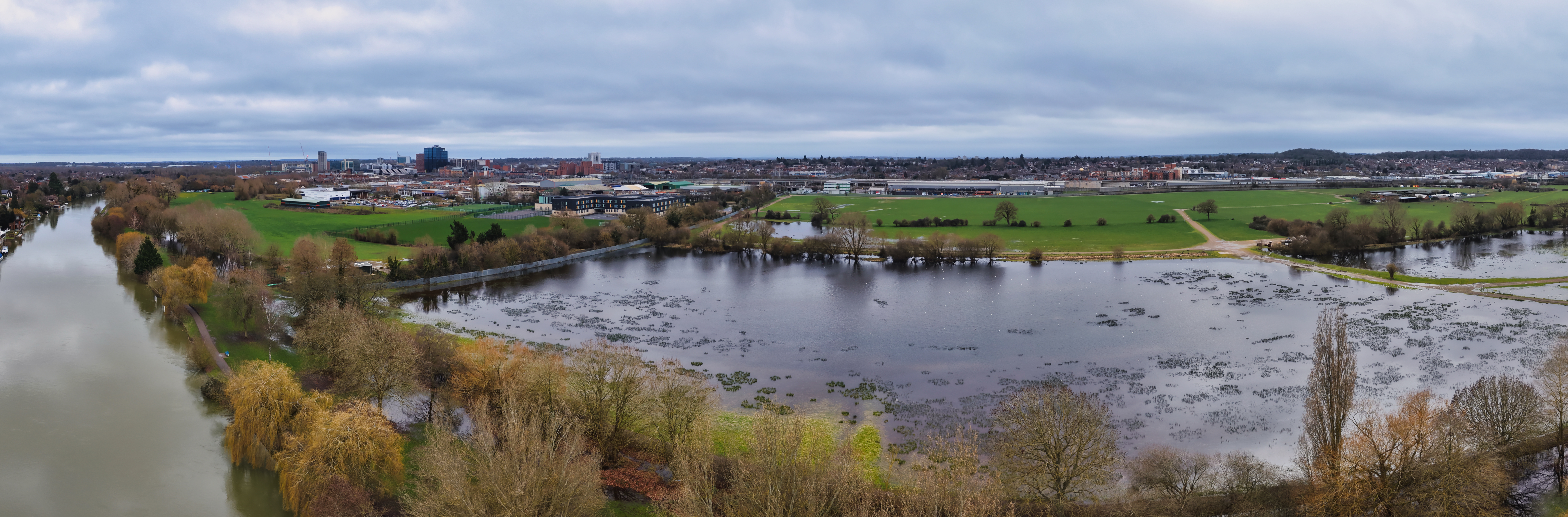
While it may feel counterintuitive to prepare for heavy rainfall during a prolonged period of insufficient rain, science and history dictate that there are high risks for deluge following drought. Areas affected by prolonged dry spells can be especially vulnerable to sudden flooding when heavy storms arrive. In regions impacted by drought-driven wildfires, scorched ground and debris can further restrict drainage, increasing the risk of flash flooding.
[New research](https://egusphere.copernicus.org/preprints/2026/egusphere-2026-3154/egusphere-2026-3154.pdf) shows that the UK's water patterns are becoming increasingly erratic, with rapid swings between droughts and floods expected to worsen over the coming decades. This growing instability poses real challenges for water managers, farmers, and infrastructure planners alike because the systems built to handle droughts or floods separately struggle when conditions flip.
Furthermore, when researchers analysed 200 UK catchments and compared historical data with future climate projections, they found these transitions vary significantly by region. Some areas are now facing much sharper changes than others, in this case, the south-east and north-west appear most vulnerable.
[Back in 2012, the UK experienced exactly this situation.](https://www.theguardian.com/environment/2012/oct/18/summer-drought-flooding-unprecedented) Following a major official drought, the country experienced its wettest summer in 100 years. Baked soils from the dry spell triggered instant surface-water flooding across several towns as the drainage infrastructure was overwhelmed.
**This year we are seeing a perfect storm of similar conditions.** For water-dependent industrial operations, from refineries and chemical plants to food processing and manufacturing, maintaining consistent water quality and supply is fundamental to business continuity.While permanent water treatment infrastructure handles day-to-day requirements, having a robust plan for unexpected, seasonal challenges provides valuable operational flexibility.
## Understanding seasonal water risks
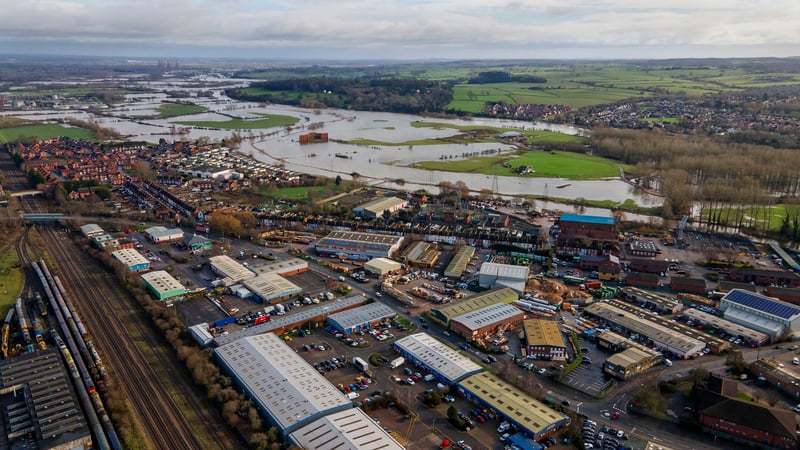
Although the UK’s shift from dry to wet conditions is a familiar seasonal pattern, extreme swings place added pressure on industrial water systems. After prolonged dry periods, hardened ground alters drainage behaviour and increases surface runoff when heavy rainfall returns.
For industrial facilities, this seasonal transition touches several operational areas:
**Water treatment systems**: Sudden changes in source water quality can challenge treatment plant capacity and efficiency. Increased turbidity, sediment loads, or contamination from surface runoff may temporarily exceed design parameters.
**Storage and distribution:** Facilities with outdoor storage tanks or exposed pipework need to consider how weather events might affect water quality or system integrity.
**Business continuity factors**: Production schedules, customer commitments, and regulatory compliance requirements don't pause for weather events. Having contingency plans ensures operations can continue even when primary systems face challenges.
**Risk assessment:** The most effective approach is identifying potential vulnerabilities before they become operational issues. Annual reviews of emergency response capabilities represent industry best practice.
## Case Study: How pre-planning enabled rapid flood recovery
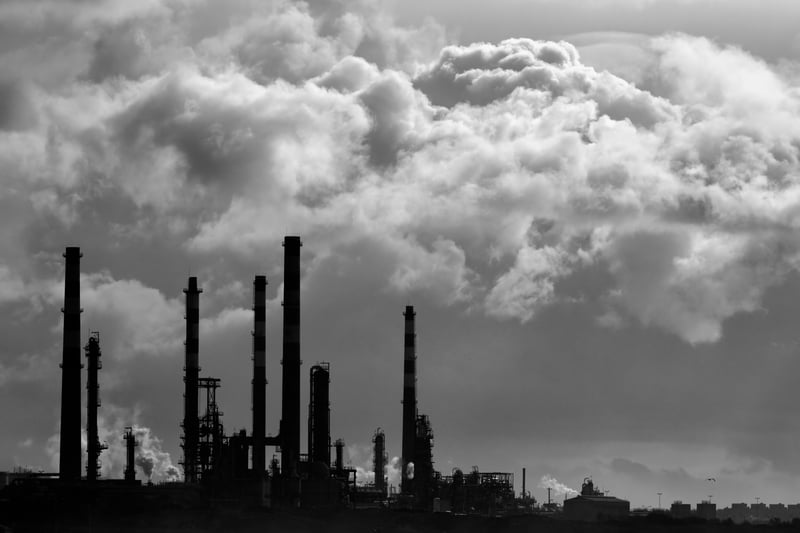
A major Italian refinery processing 14,000 barrels daily demonstrates the value of establishing water service partnerships before emergencies arise.
The Client
Back in 2016, the facility engaged [Veolia’s mobile water services](https://campaign.veoliawatertechnologies.co.uk/en-gb/mobile-water-services-ensuring-uninterrupted-operations-and-sustainability-veolia-water-technologies-0) to support its ageing water treatment system, securing a reliable supply of high-quality water for boiler operations while long-term upgrades were being planned.
The Problem
Later, When 250mm of rainfall fell in just two hours, the resulting flood covered the site with a meter of standing water. Critically, hydrocarbons from flooded equipment contaminated the water, creating both operational and environmental challenges. The refinery pumped contaminated water into vacant oil storage tanks to contain it, but with storage capacity consumed, they needed a rapid treatment solution.
**Our Solution**
Within hours, dissolved air flotation (DAF) units combined with four activated carbon filtration units were delivered and commissioned. The mobile treatment system processed 400m³/hour of contaminated floodwater, safely removing hydrocarbons before discharge. This freed storage tanks and enabled the refinery to return to pre-flood production levels while maintaining environmental compliance.
**Three factors made this rapid response possible:**
1. **Established relationship:** Veolia teams already understood site layout, safety protocols, and operational requirements—eliminating the learning curve of engaging a new supplier during a crisis.
2. **Pre-negotiated framework:** Equipment could deploy immediately without contract negotiations or procurement delays that would have extended downtime.
3. **Technology portfolio access:** The same partnership that provided RO and filtration for planned maintenance also gave access to specialised DAF and carbon systems for emergency hydrocarbon removal.
For UK facilities, this case study highlights the value of resilience planning during calmer periods, enabling a more effective response when critical situations arise. The refinery's investment in mobile water services for routine support created emergency response infrastructure that proved invaluable when unexpected challenges arose.
**Veolia has delivered similar rapid-response solutions for UK industrial clients facing flood-related water challenges.** When extreme weather events have compromised water treatment systems or contaminated source water supplies, our mobile fleet has enabled facilities to maintain operations while permanent infrastructure is restored.
## Mobile water treatment technologies
%20(1).jpg?width=800&height=534&name=Veolia%20Mobile%20Water%20Services%20-%20PSC%20Technician%20%E2%80%93%20Versaflo%20(1)%20(1).jpg)
Understanding available solutions helps operations managers develop effective resilience plans:
**MobileFlow\* filtration systems**
- Capacity: Up to 136 m³/hour (up to 250 m³/hour for M-PAK ultrafiltration)
- Removes: Suspended solids, reduces turbidity to ≤ 0.1 NTU (using ultrafiltration)
- Handles sudden increases in sediment from surface runoff
- Trailer-mounted for rapid deployment
**MobileFlow DI (Demineralisation / Ion Exchange)**
- Capacity: 22-110 m³/hour
- Produces: High-purity water (conductivity down to 0.1 µS/cm)
- Critical for boiler feedwater during source water contamination
- Off-site resin regeneration eliminates on-site chemical handling
**Mobile DeltaFlow (RO/EDI Combined)**
- Capacity: 30-70 m³/hour product flow (56-110 m³/hour feed flow)
- Produces: Ultrapure water (conductivity \<0.2 µS/cm and reactive silica \<20 ppb)
- Continuous electrochemical regeneration completely eliminates the need for regeneration chemicals or resin replacement
- Combines Reverse Osmosis and Electrodeionisation in a single, compact process unit
**Mobile RO (Reverse Osmosis)**
- Capacity: 10-148 m³/hour
- TDS rejection: 95% to 99% (97% or greater typical)
- Produces consistent high-purity water from variable sources
- Extends demineralisation capacity 10-20x when used as pre-treatment
**Specialised Treatment**
- Dissolved Air Flotation (DAF) for hydrocarbon removal
- Activated carbon for organic contaminants
- Ultrafiltration for particles and bacteria
Veolia operates the UK's largest mobile water fleet from our Peterborough service centre, available for 24/7 deployment.
## Why emergency water planning is crucial
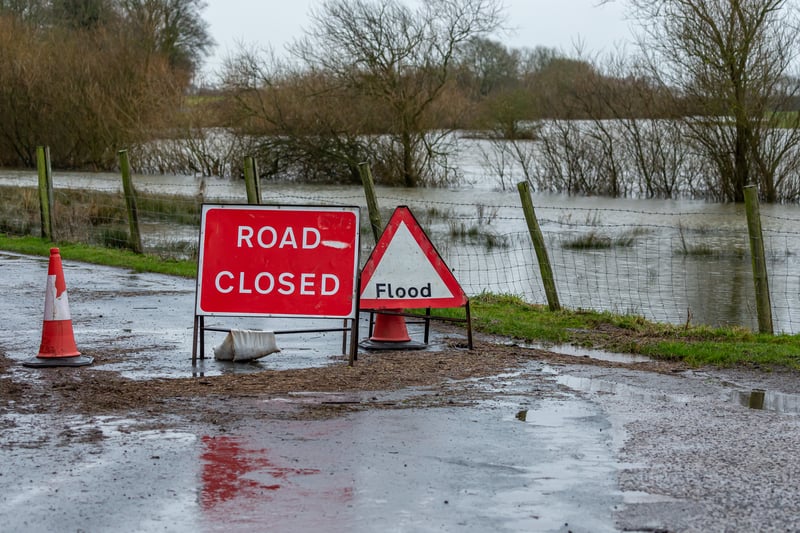
To build water resilience, operators need to fully understand their operational vulnerabilities and establish response capabilities before they're needed.
**Key planning elements**
**1. Assess your critical dependencies:**
- Which processes cannot tolerate water disruptions?
- What's the financial impact of various downtime scenarios?
- Where are your single points of failure?
- What alternative water sources could you access?
2\. Establish emergency response capability
Many UK facilities establish pre-arranged emergency water service agreements as part of their business continuity planning. These frameworks provide:
- Immediate access: Equipment dispatch within 2 hours for emergencies
- Cost certainty: Pre-negotiated rates eliminate emergency pricing
- Priority availability: Reserved equipment capacity during high-demand periods
- Faster deployment: Pre-approved site protocols and safety procedures
The advantage extends beyond emergencies. The same mobile water services support planned maintenance, capacity augmentation, water source diversification, and process trials. This makes the investment valuable for both routine and critical situations.
[](https://blog.veoliawatertechnologies.co.uk/hs/cta/wi/redirect?encryptedPayload=AVxigLKdCT%2BORnzMF3W%2FYhfe3TQib1Qr0hILuRieINpWzovsJLTks%2BDQWMzRC8F%2FeieK9TdChlfeBHQcMull17IXQuvyhmn8WLQF%2F0fy4CJxXpFYcRln7DGtRRpELfkhYssyZnvu9W24UaKiABLLFnsq5KIAmjL0VPsK8BQBoe2WYTWuz7gRNJIBkKZ3W8uYCdw1TEqEibREn0QweC30YdR%2FyaJLWeLTbAqi14%2BV4%2FWnDXDnkSzeGlum0A%2Fl7v%2FNkcZZ%2Fd%2BgiBS8C%2FKQUxFK1x4KwmiwmI%2FxD8T8KTlmRqnh6B3uTqykuIlY6nl1YDt0GOEbS41zvxUDCuSi6etX&webInteractiveContentId=426885108926&portalId=25605683)
## What next?
The key to any business continuity planning is assessing and addressing problems before they arise - and water management is no different. The weather has always been somewhat unpredictable but in recent years this is becoming more and more apparent. From water scarcity to flooding - historic levels are being surpassed and at rapid rates. To be prepared for any situation, industrial facilities must think about reviewing their emergency response capabilities and establishing partnerships that provide flexibility and rapid deployment when needed.
Whether supporting planned maintenance, managing seasonal variations, or responding to unexpected weather events, mobile water services offer a practical complement to permanent infrastructure.
The most effective resilience plans are developed during calm periods, not during crises. Taking time now to assess vulnerabilities, establish emergency frameworks, and secure priority access to mobile water services provides valuable insurance for your operations —and peace of mind for your management team.
## [Learn more about our mobile water services and contact our UK mobile team to discuss your site contingency plans](https://campaign.veoliawatertechnologies.co.uk/en-gb/mobile-water-services-ensuring-uninterrupted-operations-and-sustainability-veolia-water-technologies-0)
\*Trademark of Veolia; may be registered in one or more countries.
---
## Frequently Asked Questions
| **QUESTION** | **ANSWER** |
| --- | --- |
| **How quickly can mobile water treatment be deployed in the UK?** | For emergency situations, mobile Ion Exchange equipment can be dispatched within 2 hours of your call from our UK service centre located in Peterborough. Systems can be fully operational on sites within 24-48 hours. |
| **What is an Emergency Water Plan?** | An Emergency Water Plan is a pre-arranged framework that provides immediate access to mobile water treatment equipment, pre-negotiated rates for reassurance and consistency, priority equipment availability during high-demand periods, and pre-approved site protocols for faster deployment. Learn more about our Emergency Water Plans here. |
| **How much does an Emergency Water Plan cost?** | Emergency Water Plans are tailored to your facility's specific water requirements and operational needs. We offer complimentary site assessments to develop a customised plan with no cost or obligation. This allows us to understand your requirements and provide a transparent proposal. The investment typically represents a fraction of production downtime costs. Learn more about our Emergency Water Plans here and contact our team to arrange your free assessment. |
| **Can mobile water services support planned maintenance, not just emergencies?** | Yes. Mobile water services support planned maintenance, capacity augmentation, water source diversification, and process optimisation trials. Making them valuable for both routine and critical situations. |
| **What industries use mobile water treatment services?** | We serve water-dependent industries including refineries, petrochemical plants, pharmaceutical manufacturers, food and beverage processors, power generation stations, chemical plants, automotive manufacturers, data centres, and paper mills. Our systems meet industry-specific standards from boiler feedwater specifications to pharmaceutical-grade water. |
| **What water quality can mobile treatment systems achieve?** | Mobile systems deliver the same specifications as permanent installations: filtration to ≤ 0.1 NTU turbidity (using ultrafiltration), demineralisation down to 0.1 µS/cm conductivity (using Ion Exchange), ultrapure water with \<0.2 µS/cm conductivity and \<20 ppb silica (using combined RO/EDI), and reverse osmosis with 95% to 99% (or 97%+) TDS rejection. |
| **What's the difference between mobile RO, mobile IX/DI, and mobile EDI systems?** | Mobile RO (Reverse Osmosis) removes 95% to 99% of dissolved solids using membranes, making it ideal for pre-treatment and variable source water. Mobile IX (Ion Exchange) or DI (Demineralisation) uses ion exchange resins to produce ultra-pure water (down to 0.1 µS/cm) and requires periodic off-site or on-site chemical regeneration. Mobile EDI (Electrodeionisation) is a polishing technology that uses electricity to continuously regenerate its cells, producing ultrapure water (\<0.2 µS/cm) completely chemical-free. It is typically integrated directly with RO (such as in our DeltaFlow system). |
| **How does drought increase flood risk for industrial facilities?** | Extended dry periods reduce soil saturation levels, affecting drainage patterns. When rainfall returns, hardened soil cannot absorb water quickly, leading to increased surface runoff that can overwhelm industrial water treatment systems with sediment and contaminants. |
| **Can mobile water treatment handle contaminated floodwater?** | Yes. Our mobile fleet includes dissolved air flotation (DAF) units for hydrocarbon removal, activated carbon systems for organic contaminants, and multi-stage filtration for sediment. At an Italian refinery, we processed 400m³/hour of hydrocarbon-contaminated floodwater, enabling the facility to return to pre-flood production levels while maintaining environmental compliance. |
| **How much water can mobile treatment systems process per hour?** | Our mobile fleet offers 10-400 m³/hour capacity depending on technology. MobileFlow filtration: up to 136 m³/hour (up to 250 m³/hour for M-PAK). Mobile DI (Ion Exchange): 22-110 m³/hour. Mobile DeltaFlow RO/EDI: 30-70 m³/hour product flow. Mobile RO: 10-148 m³/hour. Specialised DAF and carbon systems: up to 400 m³/hour. For larger requirements, we deploy multiple units in parallel. |
| **What areas of the UK do you cover with mobile water services?** | We provide nationwide UK coverage from our Peterborough service centre. We regularly deploy to Scotland, Wales, Northern Ireland, and all English regions. Most UK sites are reachable within 4-6 hours for emergency equipment delivery. Location is not a barrier — our 24/7 emergency response team will respond to any UK site. |
| **Can you deploy mobile water treatment equipment outside normal business hours?** | Yes. Our emergency response team operates 24/7, 365 days a year including weekends and bank holidays. Equipment can be dispatched within 2 hours of your emergency call, regardless of the time. Our Peterborough service centre maintains ready-to-deploy units with on-call technical teams prepared to respond at any time. Call our 24/7/365 UK emergency hotline: +44 7799 772 775. |
| **What are the signs my facility needs emergency water services?** | Contact us immediately if you notice: sudden changes in source water quality (turbidity, discoloration, odor), unexpected water treatment equipment failures, capacity constraints during peak production, regulatory compliance concerns, extreme weather warnings, contamination events, or planned maintenance requiring temporary supply. Early intervention prevents costly production shutdowns. |
| **How long can industrial facilities typically operate without water?** | This varies by industry. Refineries and chemical plants may have 2-4 hours before shutdown. Food and beverage facilities might manage 4-8 hours with storage tanks. Pharmaceutical manufacturing requires continuous supply. Power stations typically have 1-3 hours buffer capacity. Industrial downtime can be extremely costly, which is why Emergency Water Plans are essential business continuity tools. |
| **What's involved in setting up an Emergency Water Plan?** | We start with a complimentary site assessment at no obligation. Our team evaluates your water requirements, critical processes, and vulnerabilities. We then develop a customised response plan. [You can learn more about it on our dedicated website page](https://campaign.veoliawatertechnologies.co.uk/en-gb/mobile-water-services-emergency-water-plan-0e711409-a17c-422d-8f63-779946f6e5ad). |
## Tags
- [Industrial](https://blog.veoliawatertechnologies.co.uk/?tid=93394872509)
- [Mobile Water Services](https://blog.veoliawatertechnologies.co.uk/?tid=93391094257)
- [Services](https://blog.veoliawatertechnologies.co.uk/?tid=93391094262)

## Author | Ivon Richmond
Ivon Richmond is Senior Sales Manager for Northern Europe - mobile water services at Veolia. Based in the UK, Ivon brings over 20 years of experience in the water treatment industry, with expertise spanning field operations, management and sales across both chemical services management and mobile water services. With a unique combination of mechanical engineering and chemistry qualifications, Ivon has developed deep technical knowledge across a diverse range of industries. This multidisciplinary background enables him to understand complex water treatment challenges from both an engineering and chemical perspective. Leading a dedicated sales team across Northern Europe, Ivon and his colleagues are committed to delivering tailored mobile water services that address specific water treatment requirements across a diverse range of industries.
[https://www.linkedin.com/in/ivon-richmond-0573b5274/](https://www.linkedin.com/in/ivon-richmond-0573b5274/)
## Related articles
## Discover *VWT UK*
### Latest news
[News](https://veoliawatertechnologies.co.uk/news/)
### Latest webinars
[Webinars](https://veoliawatertechnologies.co.uk/webinars/)
### Upcoming events
[Events](https://veoliawatertechnologies.co.uk/events/)
### Latest resources
[Resources](https://veoliawatertechnologies.co.uk/tech-resources/)

## Sign up to blog notifications
Receive the latest blog updates.
{|error|}
By checking this box, you agree to **Veolia Water Technologies's** [Privacy Policy](https://veoliawatertechnologies.co.uk/privacy-policy) and you agree to receive information on our products and services.
Keep me informed
We respect your right to privacy. Click here to view our [contact policy](https://veoliawatertechnologies.co.uk/privacy-policy).
## Thank you for subscribing.
Please note that you can update your **preferences** at any time.
Return to blog
Note: If you do not receive any emails, please check your junk folder.
```json
{
"@context" : "https://schema.org",
"@type" : "BlogPosting",
"author" : {
"@type" : "Person",
"name" : "Ivon Richmond",
"url" : "https://blog.veoliawatertechnologies.co.uk/author/ivon-richmond"
},
"dateModified" : "2026-08-20T09:36:35.068Z",
"datePublished" : "2026-08-20T08:42:28.000Z",
"headline" : "Industrial Water Resilience: Flood and Emergency Preparedness | Veolia",
"image" : [ "https://blog.veoliawatertechnologies.co.uk/hubfs/AdobeStock_1922485986.jpeg" ],
"mainEntityOfPage" : {
"@id" : "https://blog.veoliawatertechnologies.co.uk/industrial-water-resilience-uk-flood-preparedness",
"@type" : "WebPage"
},
"publisher" : {
"@type" : "Organization",
"logo" : {
"@type" : "ImageObject",
"url" : "https://blog.veoliawatertechnologies.co.uk/hubfs/header-logo.png"
},
"name" : "Veolia Water Technologies"
}
}
```