


AT A GLANCE:
Poly- and perfluoroalkyl substances (PFAS), or ‘forever chemicals’, are used in everything from firefighting foams to cookware coatings but environmental exposure to these chemicals has been linked to serious impacts on human health and the natural environment. PFAS do not break down naturally and so persist and accumulate in soil and water. They can also be challenging to remove from water; however, treatment technologies such as Granular Activated Carbon (GAC), reverse osmosis and ion exchange can help.
Poly- and perfluoroalkyl substances (PFAS), are now increasingly recognised as a serious environmental issue, and the focus on addressing these contaminants in water is growing as the body of scientific evidence on the health effects increases.
What are PFAS and what are the risks?
PFAS is a group of at least 5,000 synthetic organofluorine chemicals sometimes referred to as forever chemicals. This is because they have very strong chemical bonds meaning they do not break down, and as such persist in the environment. Many PFAS chemicals have non-stick, extreme heat resistance, and oil and water repellent properties. Therefore, these have been used in a wide range of applications since the 1940s including firefighting foams, textile and fabric treatments, cosmetics, coatings, and food packaging.
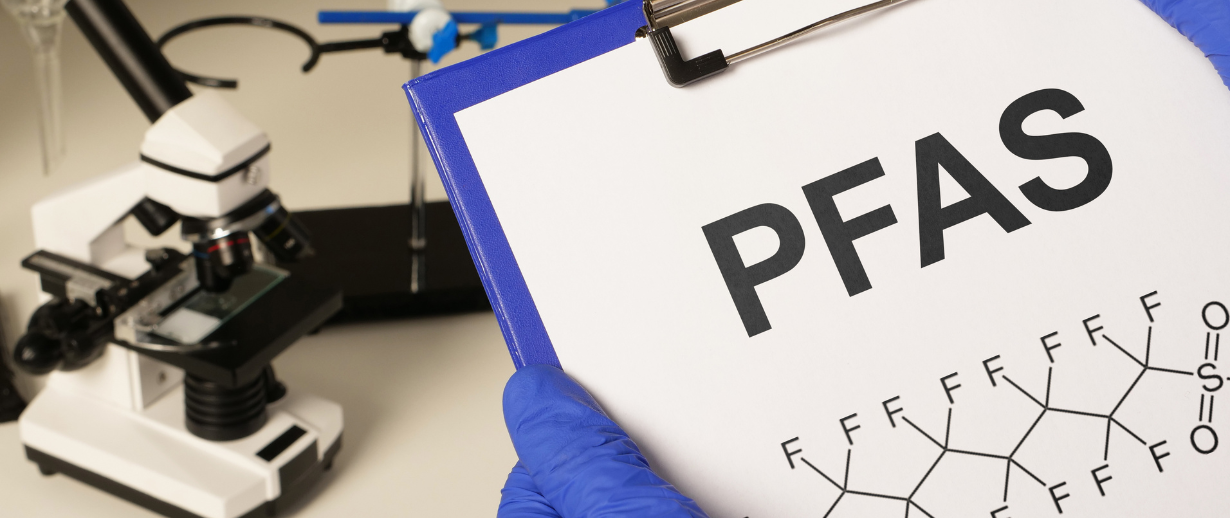
However, these chemicals have potentially serious effects on human health and the environment and after decades of use, PFAS in varying concentrations can be found in the soil, groundwater, and river, lake and estuary waters. The health effects that have been linked to PFAS exposure include cancer, lowered immune response, changes in thyroid function, liver and kidney disease and reproductive and foetus development issues.
What are the main PFAS chemicals of concern in the UK?
The type and extent of PFAS pollution in a given country or area will depend on the potential sources, such as current and historic manufacturing of certain products. In the UK, the specific PFAS chemicals that are of the greatest concern are PFOA (perfluorooctanoic acid) and PFOS (perfluorooctane sulfonate). Despite their use now being heavily restricted or banned for the vast majority of applications in the UK, they remain a pollutant that is present in the soil and water.
The duty of water companies with regard to PFAs
Although there is no specific legal requirement for water companies to remove PFAS chemicals from water, they have a duty to supply water that is safe and ‘wholesome’ – a requirement overseen by the Drinking Water Inspectorate (DWI). The DWI has set a limit for concentrations of certain individual PFAS in drinking water at 0.1 micrograms per litre (µg/L).
In 2025, the DWI published guidance for water companies on addressing PFAS pollution. This included actions for operators based on the level of PFAS contamination recorded in drinking water supplies, divided into three tiers: Tier 1, less than 0.01 µg/L; Tier 2, 0.01 to 0.1 µg/L; and Tier 3, more than 0.1 µg/L. For sites that fall into tier 3, with concentrations over the stated 0.1 µg/L, the DWI sets a clear expectation for the water company to implement emergency contingency measures to reduce concentrations to below the target level.
In order to decrease the PFAS levels in drinking water supplies, water companies are increasingly placing restrictions on businesses and other sites that present a PFAS contamination risk through more stringent effluent permit conditions.
Water treatment options to address PFAS contamination
Adsorption
The most common adsorption solution is Activated Carbon (GAC) and works by binding the contaminants to the large surface of activated carbon particles. The water is passed through a bed of activated carbon and the contaminants are captured by the carbon. When the adsorption capacity of the activated carbon is exhausted, it is then replaced.
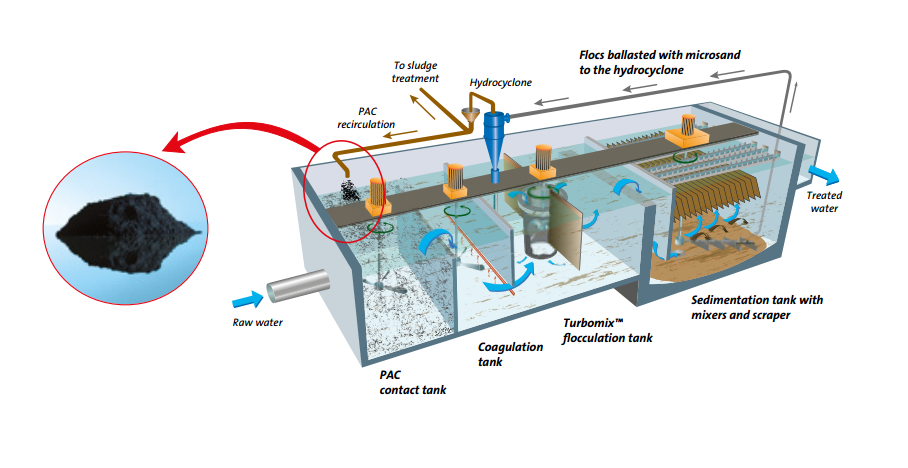
Our Actiflo* Carb solution is ideal for this purpose. As a compact, high-rate clarifier system, Actiflo has long been used for drinking water applications. Actiflo Carb is equipped with a contact tank that utilises powdered activated carbon for the adsorption of a wide range of non-flocculable organic matter, such as PFAS.
Ion exchange
Certain PFAS compounds can be adsorbed on carbon or ion exchange media. Ion exchange (IX), as the name suggests works by replacing unwanted dissolved ions with harmless ones. When the water is passed over the IX resin bed, electrostatic forces attract and bind the molecules to be removed, including a range of PFAS chemicals.
Reverse osmosis
This form of water treatment uses a semi-permeable membrane to remove over 99% of certain contaminants from water, including a majority of regulated PFAS compounds. It works by creating a high-pressure environment, which forces the water molecules to pass through the membrane, leaving the contaminants behind. These are then rejected for safe disposal.
Selecting the correct PFAS treatment solution
With water characteristics varying considerably from site to site and a very wide range of PFAS chemicals that may be present, there is no one solution that is right for all sites. Each treatment technology has benefits for specific applications and can be used in combination to meet challenging treatment requirements.
As a global water treatment specialist with decades of experience, we can provide the support and expertise to ensure the optimum solution for the reduction of PFAS contamination in water.
Click here to contact our team of water treatment experts to find out how we can help you address PFAS contamination.

Author | Daniel Parry
Daniel spent the first 10 years of his career managing proposals for large EPC (Engineering Procurement & Construction) power projects. Daniel has been with Veolia Water Technologies for 7 years where he has managed the proposals for Industrial and Municipal projects. Daniel also now manages the sales team for Industrial Wastewater opportunities ensuring that Veolia Water Technologies work with each customer to design and deliver the most appropriate solution for their needs.