---
title: Efficiency, Reliability and Future Readiness - The 3 pillars of a sustainable lab water strategy
description: Struggling to balance compliance and sustainability? Discover how Purelab™ systems deliver guaranteed ultrapure water quality while cutting energy use by up to 55% and eliminating hazardous mercury.
image: https://blog.veoliawatertechnologies.co.uk/hubfs/agua-pura-ultrapura-laboratorios.jpg
---
[Skip to content](https://blog.veoliawatertechnologies.co.uk/efficiency-reliability-and-future-readiness-are-the-3-pillars-of-a-sustainable-lab-water-strategy-4#main-content)
- UNITED KINGDOM
- [Online shop](https://uk.shop.veoliawatertechnologies.com/?__hstc=87449607.217c47630b00f349d55659f70d7b5bb6.1714376476665.1714481227412.1714485265865.4&__hssc=87449607.5.1714485265865&__hsfp=1840189571&_gl=1*1p02bir*_ga*ODg3MDc2Mzc1LjE3MTQzNzY0NzU.*_ga_Y5BN5GRTLT*MTcxNDQ4NTI2NS4zLjEuMTcxNDQ4NzQyMi41Ny4wLjA.)
- [Other Veolia sites](http://www.veoliawatertechnologies.com/en/about-us/multi-local-presence?__hstc=87449607.217c47630b00f349d55659f70d7b5bb6.1714376476665.1714481227412.1714485265865.4&__hssc=87449607.5.1714485265865&__hsfp=1840189571)
[](https://veoliawatertechnologies.co.uk/)
- Explore Water Treatment
- [ Markets](https://www.veoliawatertechnologies.co.uk/markets)
- [ Applications](https://www.veoliawatertechnologies.co.uk/applications)
- [ Technologies](https://www.veoliawatertechnologies.co.uk/technologies)
- [ Products](https://www.veoliawatertechnologies.co.uk/products)
- [ Services](https://www.veoliawatertechnologies.co.uk/services)
- [Customer Services](https://www.veoliawatertechnologies.co.uk/customer-services)
- [About Us](https://www.veoliawatertechnologies.co.uk/about-us)
- [Careers](https://www.veoliawatertechnologies.co.uk/careers)
- News & Resources
- [ Blog](https://blog.veoliawatertechnologies.co.uk)
- [ Events](https://www.veoliawatertechnologies.co.uk/events)
- [ Webinars](https://www.veoliawatertechnologies.co.uk/webinars)
- [ News](https://www.veoliawatertechnologies.co.uk/news)
- [ Resources](https://www.veoliawatertechnologies.co.uk/tech-resources)
- [ Case Studies](https://www.veoliawatertechnologies.co.uk/case-studies)
- [Contact](https://www.veoliawatertechnologies.co.uk/contact)
- Explore Water Treatment
- [ Markets](https://www.veoliawatertechnologies.co.uk/markets)
- [ Applications](https://www.veoliawatertechnologies.co.uk/applications)
- [ Technologies](https://www.veoliawatertechnologies.co.uk/technologies)
- [ Products](https://www.veoliawatertechnologies.co.uk/products)
- [ Services](https://www.veoliawatertechnologies.co.uk/services)
- [Customer Services](https://www.veoliawatertechnologies.co.uk/customer-services)
- [About Us](https://www.veoliawatertechnologies.co.uk/about-us)
- [Careers](https://www.veoliawatertechnologies.co.uk/careers)
- News & Resources
- [ Blog](https://blog.veoliawatertechnologies.co.uk)
- [ Events](https://www.veoliawatertechnologies.co.uk/events)
- [ Webinars](https://www.veoliawatertechnologies.co.uk/webinars)
- [ News](https://www.veoliawatertechnologies.co.uk/news)
- [ Resources](https://www.veoliawatertechnologies.co.uk/tech-resources)
- [ Case Studies](https://www.veoliawatertechnologies.co.uk/case-studies)
- [Contact](https://www.veoliawatertechnologies.co.uk/contact)
- [Online Shop](https://uk.shop.veoliawatertechnologies.com/)
- [Other Veolia Sites](https://www.veoliawatertechnologies.com/en/about-us/veolia-water-technologies/veolia-water-technologies-around-world)
- [Login](https://www.veoliawatertechnologies.co.uk/services/customer-portal-remote-monitoring)
- [Cookie Policy](https://www.veoliawatertechnologies.co.uk/cookie-policy)
- [Terms & Conditions](https://www.veoliawatertechnologies.co.uk/legal-0)
- [Privacy Policy](https://www.veoliawatertechnologies.co.uk/privacy-policy)
- [Modern Slavery Statement](https://www.veoliawatertechnologies.co.uk/modern-slavery-and-human-trafficking-statement)
- [Site Map](https://www.veoliawatertechnologies.co.uk/sitemap)
TOP
[ Back](https://blog.veoliawatertechnologies.co.uk)
- [Laboratory](https://blog.veoliawatertechnologies.co.uk/?tid=93395983598)
- [Science & healthcare](https://blog.veoliawatertechnologies.co.uk/?tid=93395983602)
- Connect with us
-
-
-
# Efficiency, Reliability and Future Readiness - The 3 pillars of a sustainable lab water strategy

by Veolia Water Technologies
12 February 2026
5 minutes read
[ Back](https://blog.veoliawatertechnologies.co.uk) Follow
## Achieve ultrapure water quality and up to 55% energy reduction
Laboratories today face a complex balancing act. Regulatory and environmental requirements are increasing, budgets are under pressure, and expectations around data reliability remain uncompromising. At the same time, laboratories are expected to reduce their environmental footprint and manage resources more efficiently.
One area where these challenges converge is ultrapure water production. Essential for sensitive analytical and life science applications, ultrapure water systems have traditionally been associated with high energy consumption, water rejection, and the use of hazardous materials.
For laboratory managers, the key question is no longer whether to act, but how to improve sustainability without introducing risk to analytical performance or compliance.
## Sustainable water purification beyond environmental claims
Sustainability in laboratories must deliver measurable, operational benefits. Poorly designed systems can lead to: unnecessary water and energy consumption, frequent consumable replacement, increased downtime and maintenance, and higher long-term operating costs.
A sustainable purification strategy should therefore support efficiency, reliability and future readiness, not just environmental targets.
With decades of experience supporting laboratories worldwide, Veolia, through its Elga™ LabWater solutions, focuses on helping laboratories use resources more intelligently, extend system lifecycles and reduce exposure to regulated substances.
## Purelab™ flex: ultrapure water designed for evolving laboratory workflows
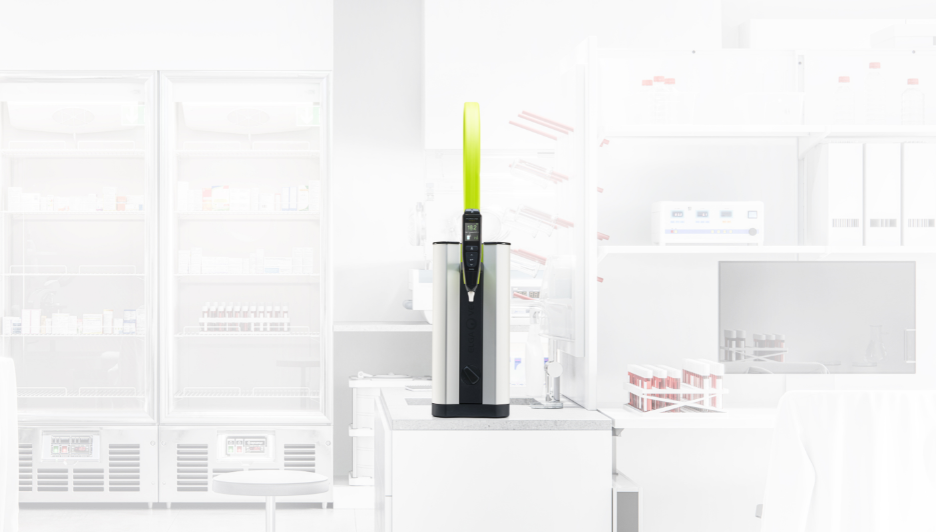
Laboratory needs are rarely static. New analytical techniques, additional instruments and changing regulatory expectations require systems that can adapt without excessive waste or reinvestment.
The [**Purelab™ flex**](https://blog.veoliawatertechnologies.co.uk/introducing-the-purelab-flex-3-water-purification-system) range has been developed to meet these challenges through a **modular, all-in-one purification platform**. It supports a wide range of applications, from reagent preparation and glassware washing to highly sensitive analyses, such as PCR, HPLC, and LC-MS, using either pre-treated water or potable feed water.
From an analytical perspective, Purelab™ flex delivers:
- Type I ultrapure water quality (18.2 MΩ·cm)
- Very low TOC levels (\<5 ppb)
- Real-time monitoring to support traceability and reproducibility
- Continuous supply for analytical instruments
From a sustainability standpoint, the system is engineered to reduce resource use across its lifecycle:
- Up to **55% reduction in energy consumption** using intelligent ECO mode
- Approximately **20% reduction in water reject** through a high-efficiency reverse osmosis module
- More sustainable manufacturing, including recycled plastics, FSC-certified packaging and low-emission materials
For laboratories, this means **lower operational costs, reduced environmental impact and greater flexibility**. These benefits align with evolving requirements, particularly in response to tighter regulatory scrutiny, increased expectations for data integrity and traceability, and more demanding water quality specifications.
## Eliminating mercury from water purification
Another critical sustainability challenge in laboratory water purification is the continued reliance on **mercury-based UV lamps**. While historically effective, mercury is now recognised as a persistent and hazardous substance subject to increasing regulatory scrutiny.
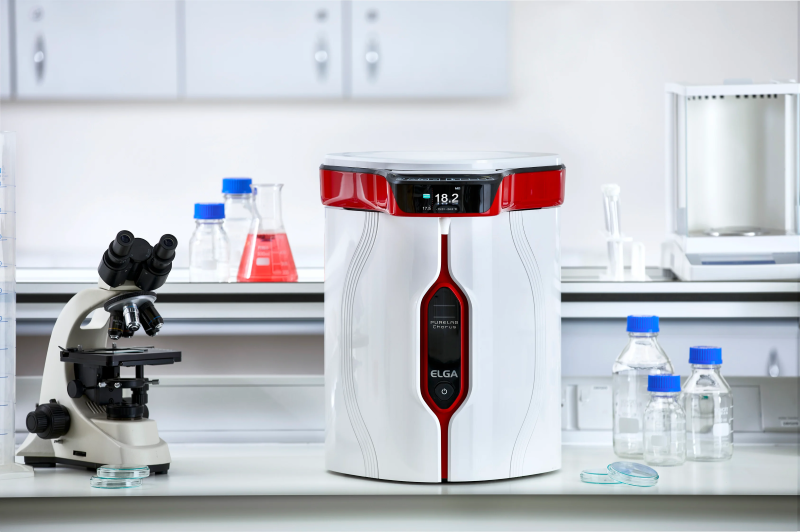
International agreements such as the **UN Minamata Convention** aim to progressively restrict and eliminate mercury use, which will create long-term compliance, disposal and safety challenges for laboratories. The [Purelab™ Chorus Mercury Free](https://www.elgalabwater.com/purelab-chorus-1) addresses these concerns by replacing traditional mercury lamps with xenon excimer UV technology. This mercury-free approach provides:
- Complete elimination of mercury from the system
- UV-C emission at 172 nm for effective TOC reduction
- Lamp lifetime of up to **5 years**, compared with 12–18 months for mercury lamps
- Instant start-up, improved control of UV emissions and enhanced operator safety
- Simplified end-of-life handling and reduced environmental risk
By removing mercury entirely, laboratories reduce regulatory exposure while maintaining the water quality required for sensitive applications. They also contribute to a healthier environment by eliminating the risk of mercury contamination.
## **Supporting compliance, reliability and long-term decision-making**
Transitioning to more sustainable purification technologies must be carefully managed. Mercury-based and mercury-free systems are not directly interchangeable, and laboratories must consider:
- application sensitivity
- existing infrastructure
- regulatory constraints
- budget and operational continuity
Veolia supports laboratories through **application-specific assessments**, helping determine the most appropriate timing and configuration for system upgrades. This ensures sustainability improvements are aligned with real operational needs rather than imposed as one-size-fits-all solutions.
## **Sustainable ultrapure water without compromise**
From academic research and industrial R&D to pharmaceutical quality control, laboratories rely on ultrapure water every day. The challenge is to deliver this water **consistently, efficiently and responsibly**.
By combining modular system design, reduced energy and water consumption, and the elimination of hazardous substances, **Purelab™ flex** and **Purelab™ Chorus Mercury Free** demonstrate that sustainability can be a **driver of performance**, not a limitation.
---
## **Looking to reduce the environmental impact of your laboratory water systems without compromising analytical results?**
Our specialists can help you evaluate your current setup and define a purification strategy aligned with your applications, compliance requirements and sustainability objectives.
👉 [**Contact our laboratory water experts**](https://www.veoliawatertechnologies.co.uk/science-healthcare-water-contact)
## Tags
- [Laboratory](https://blog.veoliawatertechnologies.co.uk/?tid=93395983598)
- [Science & healthcare](https://blog.veoliawatertechnologies.co.uk/?tid=93395983602)
## Related articles
## Discover *VWT UK*
### Latest news
[News](https://veoliawatertechnologies.co.uk/news/)
### Latest webinars
[Webinars](https://veoliawatertechnologies.co.uk/webinars/)
### Upcoming events
[Events](https://veoliawatertechnologies.co.uk/events/)
### Latest resources
[Resources](https://veoliawatertechnologies.co.uk/tech-resources/)

## Sign up to blog notifications
Receive the latest blog updates.
{|error|}
By checking this box, you agree to **Veolia Water Technologies's** [Privacy Policy](https://veoliawatertechnologies.co.uk/privacy-policy) and you agree to receive information on our products and services.
Keep me informed
We respect your right to privacy. Click here to view our [contact policy](https://veoliawatertechnologies.co.uk/privacy-policy).
## Thank you for subscribing.
Please note that you can update your **preferences** at any time.
Return to blog
Note: If you do not receive any emails, please check your junk folder.
```json
{
"@context" : "https://schema.org",
"@type" : "BlogPosting",
"author" : {
"@type" : "Person",
"name" : "Veolia Water Technologies",
"url" : "https://blog.veoliawatertechnologies.co.uk/author/veolia-water-technologies"
},
"dateModified" : "2026-06-18T08:58:26.692Z",
"datePublished" : "2026-02-12T11:47:53.000Z",
"headline" : "Efficiency, Reliability and Future Readiness - The 3 pillars of a sustainable lab water strategy",
"image" : [ "https://blog.veoliawatertechnologies.co.uk/hubfs/agua-pura-ultrapura-laboratorios.jpg" ],
"mainEntityOfPage" : {
"@id" : "https://blog.veoliawatertechnologies.co.uk/efficiency-reliability-and-future-readiness-are-the-3-pillars-of-a-sustainable-lab-water-strategy-4",
"@type" : "WebPage"
},
"publisher" : {
"@type" : "Organization",
"logo" : {
"@type" : "ImageObject",
"url" : "https://blog.veoliawatertechnologies.co.uk/hubfs/header-logo.png"
},
"name" : "Veolia Water Technologies"
}
}
```