---
title: AMP8 Explained - The £104 Billion Investment for England and Wales Water Infrastructure
description: Explore AMP8, the £104 billion investment for water infrastructure in England and Wales, focusing on environmental improvements and network resilience.
image: https://blog.veoliawatertechnologies.co.uk/hubfs/AMP8%20Blog%20Banner.jpg
---
[Skip to content](https://blog.veoliawatertechnologies.co.uk/amp8-explained-the-104-billion-investment-for-england-and-wales-water-infrastructure#main-content)
- UNITED KINGDOM
- [Online shop](https://uk.shop.veoliawatertechnologies.com/?__hstc=87449607.217c47630b00f349d55659f70d7b5bb6.1714376476665.1714481227412.1714485265865.4&__hssc=87449607.5.1714485265865&__hsfp=1840189571&_gl=1*1p02bir*_ga*ODg3MDc2Mzc1LjE3MTQzNzY0NzU.*_ga_Y5BN5GRTLT*MTcxNDQ4NTI2NS4zLjEuMTcxNDQ4NzQyMi41Ny4wLjA.)
- [Other Veolia sites](http://www.veoliawatertechnologies.com/en/about-us/multi-local-presence?__hstc=87449607.217c47630b00f349d55659f70d7b5bb6.1714376476665.1714481227412.1714485265865.4&__hssc=87449607.5.1714485265865&__hsfp=1840189571)
[](https://veoliawatertechnologies.co.uk/)
- Explore Water Treatment
- [ Markets](https://www.veoliawatertechnologies.co.uk/markets)
- [ Applications](https://www.veoliawatertechnologies.co.uk/applications)
- [ Technologies](https://www.veoliawatertechnologies.co.uk/technologies)
- [ Products](https://www.veoliawatertechnologies.co.uk/products)
- [ Services](https://www.veoliawatertechnologies.co.uk/services)
- [Customer Services](https://www.veoliawatertechnologies.co.uk/customer-services)
- [About Us](https://www.veoliawatertechnologies.co.uk/about-us)
- [Careers](https://www.veoliawatertechnologies.co.uk/careers)
- News & Resources
- [ Blog](https://blog.veoliawatertechnologies.co.uk)
- [ Events](https://www.veoliawatertechnologies.co.uk/events)
- [ Webinars](https://www.veoliawatertechnologies.co.uk/webinars)
- [ News](https://www.veoliawatertechnologies.co.uk/news)
- [ Resources](https://www.veoliawatertechnologies.co.uk/tech-resources)
- [ Case Studies](https://www.veoliawatertechnologies.co.uk/case-studies)
- [Contact](https://www.veoliawatertechnologies.co.uk/contact)
- Explore Water Treatment
- [ Markets](https://www.veoliawatertechnologies.co.uk/markets)
- [ Applications](https://www.veoliawatertechnologies.co.uk/applications)
- [ Technologies](https://www.veoliawatertechnologies.co.uk/technologies)
- [ Products](https://www.veoliawatertechnologies.co.uk/products)
- [ Services](https://www.veoliawatertechnologies.co.uk/services)
- [Customer Services](https://www.veoliawatertechnologies.co.uk/customer-services)
- [About Us](https://www.veoliawatertechnologies.co.uk/about-us)
- [Careers](https://www.veoliawatertechnologies.co.uk/careers)
- News & Resources
- [ Blog](https://blog.veoliawatertechnologies.co.uk)
- [ Events](https://www.veoliawatertechnologies.co.uk/events)
- [ Webinars](https://www.veoliawatertechnologies.co.uk/webinars)
- [ News](https://www.veoliawatertechnologies.co.uk/news)
- [ Resources](https://www.veoliawatertechnologies.co.uk/tech-resources)
- [ Case Studies](https://www.veoliawatertechnologies.co.uk/case-studies)
- [Contact](https://www.veoliawatertechnologies.co.uk/contact)
TOP
[ Back](https://blog.veoliawatertechnologies.co.uk)
- [Municipal](https://blog.veoliawatertechnologies.co.uk/?tid=93395983597)
- Connect with us
-
-
-
# AMP8 Explained - The £104 Billion Investment for England and Wales Water Infrastructure

by Paul Cooper
11 August 2026
5 minutes read
[ Back](https://blog.veoliawatertechnologies.co.uk) Follow
**At a glance:** *The current Asset Management Period (AMP8), which runs from 2025 to 2030, will see the water companies in England and Wales collectively invest £104 billion in asset, infrastructure and environmental performance improvements with the aim of creating a more efficient and resilient water supply network while protecting and enhancing natural habitats. *
**The five years of Asset Management Period 8 (AMP8) will see record levels of investment by water companies across England and Wales to address some of the biggest challenges facing the industry and improve resilience. Paul Cooper, Business Development Manager (Municipal and Industrial Wastewater), here at Veolia provides an overview of the Asset Management Period cycle and what AMP8 will mean for the sector, customers and the environment.**
The UK water industry has entered one of its most ambitious periods of investment and transformation to date with an increased level of £104 billion spending approved by the regulator Ofwat.
## **What is AMP8?**
For water companies in England and Wales, prices limits, asset investment levels, performance objectives and investor returns are set for the next five years through a Price Review and Asset Management Period regulatory cycle. AMP8, as the name suggests, is the eighth and current period, which runs from April 2025 to March 2030.
Every five years the water regulator Ofwat undertakes a price review. This involves each water company that operates in England and Wales submitting a detailed plan outlining what it wants to achieve over the next five years. Each water company sets out how much it plans to spend to meet its service obligations and achieve regulatory compliance; how this impacts customer water bills; and how this plan aligns with the long-term 25-year strategy. Ofwat then reviews these plans to ensure a balance between the investment required and the cost to customers. The agreed plans, also referred to as ‘final determinations’, are then published, which forms the basis of the next AMP. Water companies then work with their supply chains to deliver the asset upgrades and network improvements.
## **How does this compare with the approach in Scotland (SR27)?**
The process in Scotland is somewhat similar but with important differences. In Scotland, all water and wastewater services are delivered by Scottish Water, a single, publicly owned water company. Similar to England and Wales, every six years Scottish water is required to submit a business plan setting out the funding needed to deliver its obligations to customers and detailing the level of investment it intends to make. This process is referred to as the Strategic Review of Charges. The next cycle, SR27, which covers 2027 to 2033, will see Scottish Water invest a significantly increased £8.1 billion in water and wastewater assets, maintenance and improvements – a similar scale of investment to Yorkshire Water’s AMP8 plan with both water companies serving a similar number of customers. Read more about SR27 [here](https://blog.veoliawatertechnologies.co.uk/what-you-need-to-know-about-sr27).
## **What will AMP8 deliver?**
**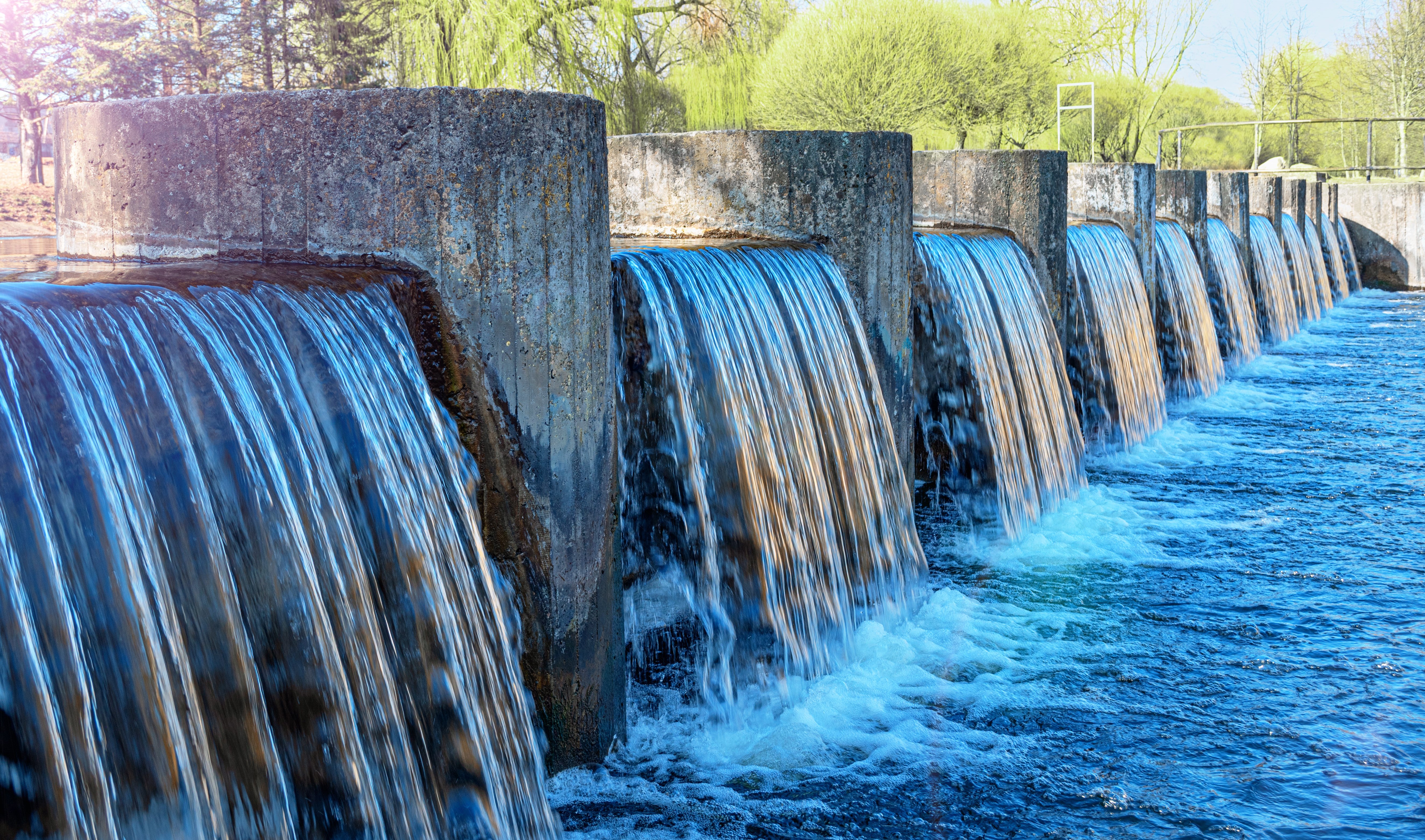**
Over the next five years the water companies of England and Wales will make investments in a wide range of areas to meet new more stringent environmental targets, address issues in their network, improve service and continue the drive for net zero by 2050. Each water company has been set specific performance targets – in some cases as many as 29 different targets – to be achieved by 2030.
Collectively the plans include £24 billion, over a fifth of the total £104 billion investment, for environmental improvements. This includes upgrading over 1,700 wastewater treatment works to help reduce pollution and delivering nearly 3,000 storm overflow projects with the aim of reducing spills by 45% compared to 2021 levels. This investment will also go into protecting over 15,000 km of rivers in England and Wales and £3 billion is set aside for green schemes such as expanding the use of nature-based solutions.
In total £6 billion will be invested in reducing nutrient pollution, including nitrogen and phosphorus, which can be extremely damaging to aquatic ecosystems by causing eutrophication. Ofwat believes that this spending will help to achieve a 28% reduction in the phosphorus entering rivers from water company activities.
Additionally, £12 billion of the total investment is allocated to improve and expand the water supply across England and Wales. This includes work on nine new reservoirs and nine large-scale water transfer projects to address local shortages. The water companies also aim to reduce leakage by a further 17%, bringing it to the lowest level since privatisation of the water sector in 1989. Overall, the projects included in AMP8 will deliver an estimated extra 424 million litres of water supply per day by 2030 – the equivalent to 3 million people’s usage.
There are also targets within AMP8 to improve drinking water quality. Ofwat has set a target for the water companies to reduce the number of contacts from customers on water quality issues by 29%.
## **How can Veolia can support the delivery of AMP8?**
**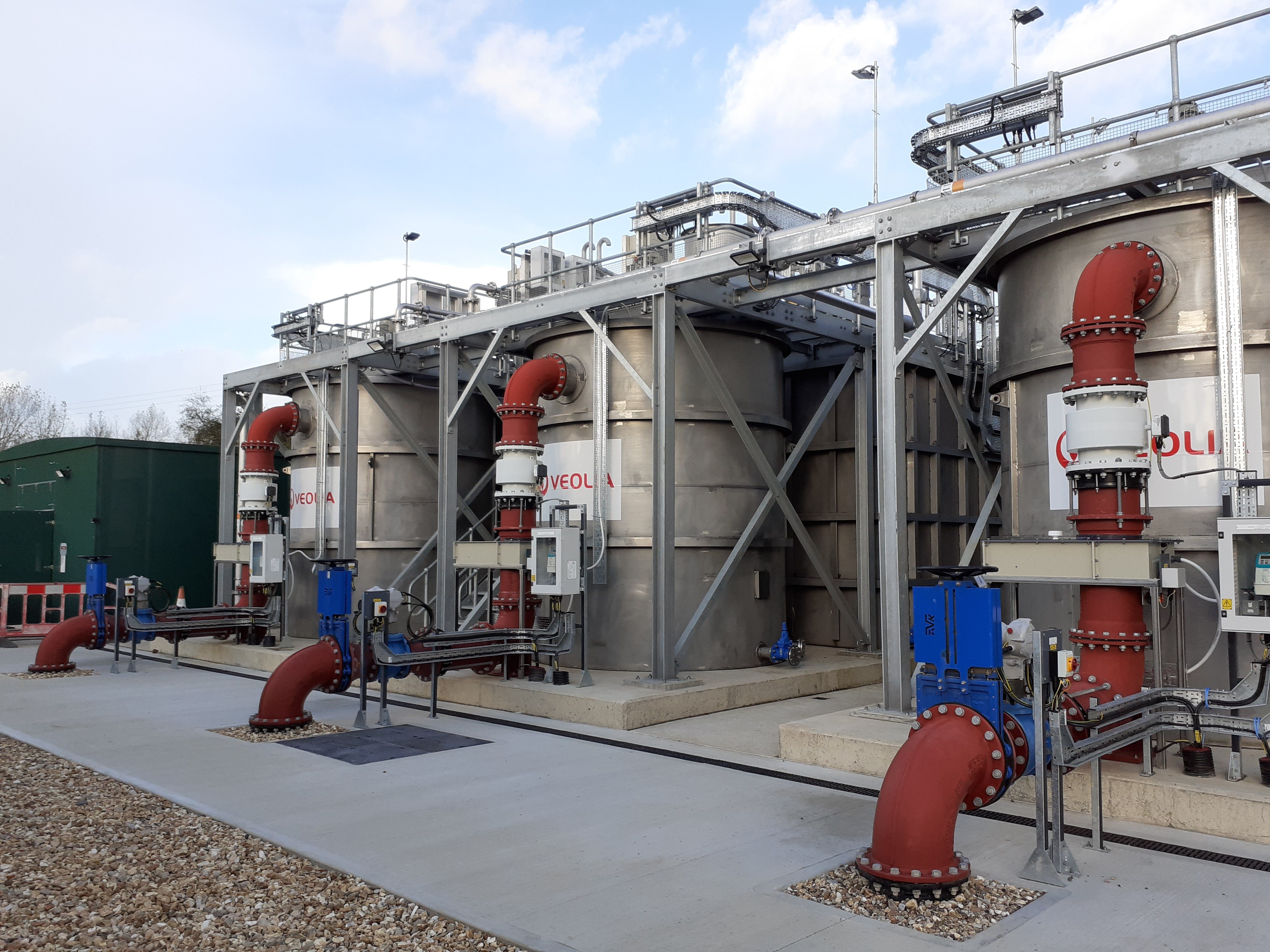**
AMP8 represents a significant period of investment in the water sector, with water companies across England and Wales focused on improving environmental performance, strengthening network resilience, reducing pollution, enhancing customer outcomes and preparing infrastructure for future challenges. To deliver the ambitious programme of asset and infrastructure improvements, the water companies need strategic partners, such as Veolia, who can provide proven technologies and process solutions, engineering expertise and a collaborative approach.
At Veolia, we have extensive experience delivering advanced water and wastewater treatment solutions for water companies across the UK. Our end-to-end capabilities support projects from concept and design through to installation, commissioning, operation and optimisation. Our comprehensive portfolio includes technologies for drinking water and wastewater treatment, alongside digital monitoring solutions, all of which can help improve operational performance, enhance resilience and meet increasingly demanding environmental targets.
Find out more about our municipal water treatment solutions [here](https://www.veoliawatertechnologies.co.uk/applications/municipal-wastewater-treatment).
## Tags
- [Municipal](https://blog.veoliawatertechnologies.co.uk/?tid=93395983597)
## Related articles
## Discover *VWT UK*
### Latest news
[News](https://veoliawatertechnologies.co.uk/news/)
{|item.processed.title|}
Published: {|item.processed.published|}
### Latest webinars
[Webinars](https://veoliawatertechnologies.co.uk/webinars/)
{|item.processed.title|}
Date: {|item.processed.date|}
### Upcoming events
[Events](https://veoliawatertechnologies.co.uk/events/)
{|item.processed.title|}
Date: {|item.processed.date\_from|} - {|item.processed.date\_to|}
### Latest resources
[Resources](https://veoliawatertechnologies.co.uk/tech-resources/)
{|item.processed.title|}
Published: {|item.processed.published|}
| {|item.processed.city|}

## Sign up to blog notifications
Receive the latest blog updates.
{|error|}
By checking this box, you agree to **Veolia Water Technologies's** [Privacy Policy](https://veoliawatertechnologies.co.uk/privacy-policy) and you agree to receive information on our products and services.
Keep me informed
We respect your right to privacy. Click here to view our [contact policy](https://veoliawatertechnologies.co.uk/privacy-policy).
## Thank you for subscribing.
Please note that you can update your **preferences** at any time.
Return to blog
Note: If you do not receive any emails, please check your junk folder.
```json
{
"@context" : "https://schema.org",
"@type" : "BlogPosting",
"author" : {
"@type" : "Person",
"name" : "Paul Cooper",
"url" : "https://blog.veoliawatertechnologies.co.uk/author/paul-cooper"
},
"dateModified" : "2026-08-11T13:25:46.659Z",
"datePublished" : "2026-08-11T13:25:46.000Z",
"headline" : "AMP8 Explained - The £104 Billion Investment for England and Wales Water Infrastructure",
"image" : [ "https://blog.veoliawatertechnologies.co.uk/hubfs/AMP8%20Blog%20Banner.jpg" ],
"mainEntityOfPage" : {
"@id" : "https://blog.veoliawatertechnologies.co.uk/amp8-explained-the-104-billion-investment-for-england-and-wales-water-infrastructure",
"@type" : "WebPage"
},
"publisher" : {
"@type" : "Organization",
"logo" : {
"@type" : "ImageObject",
"url" : "https://blog.veoliawatertechnologies.co.uk/hubfs/header-logo.png"
},
"name" : "Veolia Water Technologies"
}
}
```